3D Printed Medical Implants & Instruments: Design to Clinical Trial Excellence in Vietnam
3D Printed Medical Implants & Instruments: Design to Clinical Trial Excellence in Vietnam
How additive manufacturing is revolutionizing personalized healthcare through advanced design, FDA/ISO compliance, and Vietnam’s unique clinical trial advantages
The global healthcare additive manufacturing market reached USD 13.33 billion in 2025 and is projected to surge to USD 78.06 billion by 2034, growing at a remarkable 21.70% CAGR. This explosive growth is driven by the healthcare industry’s urgent need for personalized medical solutions, faster production cycles, and cost-effective innovation.
For medical device manufacturers, surgeons, and healthcare executives seeking cutting-edge implant and surgical instrument solutions, additive manufacturing (AM)—also known as 3D printing—represents not just a technological advancement, but a fundamental transformation in how we design, validate, and deliver patient-specific medical devices.
PSH Design stands at the forefront of this revolution, combining advanced engineering capabilities with exclusive clinical trial partnerships across Vietnam’s top three hospitals, offering an integrated design-to-validation pathway that dramatically reduces time-to-market while ensuring international regulatory compliance.
In this comprehensive guide, we’ll explore how additive manufacturing is transforming medical device development—from core technologies and design principles to real-world clinical success stories and Vietnam’s emerging role as a strategic hub for cost-effective, fast-tracked medical device innovation.
1. Understanding Additive Manufacturing for Medical Devices
1.1 What is Additive Manufacturing?
Additive Manufacturing is a layer-by-layer production process that builds three-dimensional objects directly from digital CAD models. Unlike traditional subtractive manufacturing that cuts away material, AM adds material only where needed, enabling unprecedented design freedom for complex geometries impossible to achieve through conventional methods.
1.2 Three Critical Advantages for Healthcare
In healthcare applications, AM technology delivers transformative benefits:
Personalization at Scale: Every patient’s anatomy is unique. AM enables the production of custom cranial implants, orthopedic replacements, dental prosthetics, and surgical instruments tailored to individual patient CT/MRI scans, improving surgical outcomes and reducing complications.
Accelerated Development Cycles: Traditional implant development requires 12-18 months from concept to clinical testing. AM reduces this timeline to 3-6 months, critical for emergency surgeries, rare disease treatments, and rapid iteration based on clinical feedback.
Material Efficiency: AM achieves up to 70% material waste reduction compared to traditional machining, particularly important when working with expensive biocompatible materials like titanium Ti6Al4V alloy or PEEK polymers.
1.3 Market Momentum and Clinical Validation
The medical device market, valued at USD 681.57 billion in 2025 and projected to reach USD 955.49 billion by 2030, is increasingly adopting AM technologies. Leading medical centers including Mayo Clinic and major manufacturers like Stryker have integrated 3D printing into their standard workflows, demonstrating the technology’s maturity and clinical validation.
With this foundation established, let’s examine how AM is being applied across diverse clinical scenarios—from life-saving cranial reconstructions to precision surgical instruments.
2. Clinical Applications: From Cranial Reconstruction to Surgical Instruments
Additive manufacturing has proven its value across multiple medical specialties. Understanding these applications helps device developers identify opportunities for innovation.
2.1 Custom Patient-Specific Implants
Cranial and Maxillofacial Reconstruction
Complex skull defects from trauma, cancer resection, or congenital conditions require precise geometric matching. 3D Systems pioneered titanium cranial implants using Direct Metal Laser Sintering (DMLS) technology, achieving facial structure restoration with submillimeter precision.
Mayo Clinic reported 96% successful bony union in patients receiving 3D-printed mandibular reconstruction guides, compared to only 80% with conventional approaches—while simultaneously reducing complication rates from 38% to 11%.
Orthopedic Joint Replacements
Stryker’s AMagine™ process creates hip and spinal implants with porous titanium matrices that mimic cancellous bone structure, promoting biological integration. Their Monterey AL Interbody System features lattice geometries that encourage bone ingrowth, reducing revision surgery rates.
Clinical data shows 100% of modern porous titanium components remained radiologically well-fixed at 10-year follow-up, demonstrating long-term durability.
Dental Implants and Prosthetics
Materialise (Belgium) provides comprehensive software platforms enabling dental clinics across Europe to design and manufacture patient-specific dental crowns, bridges, and implant abutments. This technology reduces fabrication time from weeks to 2-3 days while improving fit accuracy.
2.2 Advanced Surgical Instruments
Beyond implants, AM is revolutionizing surgical tool design:
Ergonomic Optimization: Stryker reduced surgical instrument weight by 15% through topology optimization, decreasing surgeon hand fatigue during lengthy procedures and improving precision in microsurgery applications.
Complex Functionality: AM enables integration of multiple features—cooling channels, aspiration pathways, and sensor housings—within single-piece instruments that would require assembly of 10+ components using traditional manufacturing.
Rapid Customization: Specialized instruments for rare surgical procedures can be designed and produced in 48-72 hours, compared to 6-8 weeks for conventional tooling.
These clinical successes raise an important question: What makes AM-designed medical devices perform so exceptionally? The answer lies in advanced engineering principles specifically adapted for additive manufacturing.
3. Design Optimization for Additive Manufacturing: Engineering Excellence
Creating medical implants and instruments for AM requires fundamentally different design thinking than traditional manufacturing. This section reveals the engineering principles that unlock AM’s full potential.
3.1 Topology Optimization and Generative Design
Modern AM design software leverages AI-powered algorithms to analyze load paths, stress distributions, and material requirements. The software removes unnecessary material while maintaining structural integrity, creating organic lattice structures that achieve:
-
40-60% weight reduction compared to solid designs
-
Enhanced bone integration through controlled porosity (30-70% void fraction)
-
Improved biomechanical performance by matching Young’s modulus to surrounding bone tissue
GE Additive and Siemens Healthineers provide integrated CAD/CAM/simulation platforms specifically for medical device design. These tools predict printing outcomes, identify potential weak points, and automatically adjust parameters to ensure FDA and ISO 13485:2016 compliance requirements are met during the design phase.
3.2 Material Selection: Biocompatibility and Performance
Titanium Ti6Al4V: The Gold Standard
The gold standard for load-bearing implants, this alloy offers:
-
Excellent biocompatibility with <0.1% rejection rate
-
High strength-to-weight ratio (860 MPa tensile strength, 4.43 g/cm³ density)
-
Superior corrosion resistance in physiological environments
-
EOS and GE Additive supply certified medical-grade Ti6Al4V powder meeting ASTM F136 and ISO 5832-3 standards
PEEK (Polyetheretherketone) Polymers
Increasingly popular for spine and dental applications:
-
Radiolucent properties enable clear post-operative imaging
-
Elastic modulus closer to bone than metal (3-4 GPa vs. 110 GPa for titanium)
-
Lower manufacturing cost than titanium
-
Can be reinforced with carbon fiber for enhanced strength
Cobalt-Chrome Alloys
Preferred for high-wear applications like hip joints and dental frameworks, offering exceptional hardness and wear resistance.
3.3 Design for Manufacturing (DFM) Principles
Successful AM implant design requires attention to:
Support Structure Optimization: Minimizing support material reduces post-processing time and preserves surface quality on critical bone-interface surfaces.
Build Orientation: Strategic part positioning on the print bed affects mechanical properties, surface finish, and residual stress profiles.
Feature Resolution: Current metal AM systems achieve 50-100 micron layer thickness, sufficient for most orthopedic applications but requiring careful design for fine features.
Understanding design principles is essential, but equally important is knowing which manufacturing technologies and materials will best realize those designs. Let’s explore the AM technology landscape.
4. Additive Manufacturing Technologies and Materials Ecosystem
The right technology-material combination determines whether a medical device concept becomes a clinical reality. This section provides a practical guide to AM systems used in medical device production.
4.1 Core AM Technologies for Medical Implants
Direct Metal Laser Sintering (DMLS) / Selective Laser Melting (SLM)
The most widely adopted metal AM processes for implants. A high-powered laser (200-400W) selectively fuses metal powder particles layer by layer in an inert atmosphere. EOS M 290 and GE Additive M2 Series 5 machines are FDA-validated systems used in medical device production facilities worldwide.
Key specifications:
-
Build volume: 250 x 250 x 325 mm (sufficient for most implants)
-
Layer thickness: 20-60 microns
-
Typical build time: 8-24 hours depending on geometry
-
Post-processing: Heat treatment, HIP (Hot Isostatic Pressing), surface finishing
Electron Beam Melting (EBM)
Uses electron beam rather than laser, enabling faster build speeds and reduced residual stress. Particularly suitable for titanium implants. However, produces slightly rougher surface finish requiring more extensive post-processing.
Polymer AM Technologies
For PEEK and biocompatible polymer implants:
-
FDM (Fused Deposition Modeling): Cost-effective for surgical guides and non-load-bearing implants
-
SLS (Selective Laser Sintering): Higher resolution polymer parts
-
Material Jetting: Multi-material capabilities for composite designs
4.2 Quality Assurance and Process Control
Medical device manufacturing requires rigorous quality management:
In-Process Monitoring
Modern AM systems feature:
-
Real-time melt pool monitoring using high-speed cameras
-
Layer-by-layer geometric verification
-
Automated defect detection using AI vision systems
Post-Production Testing
Per FDA and ISO 13485 requirements:
-
CT scanning for internal porosity verification
-
Mechanical testing (tensile, fatigue, compression)
-
Surface roughness measurement (Ra <6.3 μm for bone-interface surfaces)
-
Chemical composition analysis via spectroscopy
-
Biocompatibility testing per ISO 10993 standards
EOS systems integrate quality documentation throughout the build process, automatically generating the Design History File (DHF) documentation required for FDA 510(k) submissions and CE marking under EU MDR 2017/745.
Technology selection directly impacts project economics and timelines. Let’s quantify the business case for AM in medical device development.
5. Economic and Clinical Benefits: The Business Case for AM Medical Devices
Beyond technical capabilities, additive manufacturing delivers measurable business advantages that are reshaping medical device development strategies.
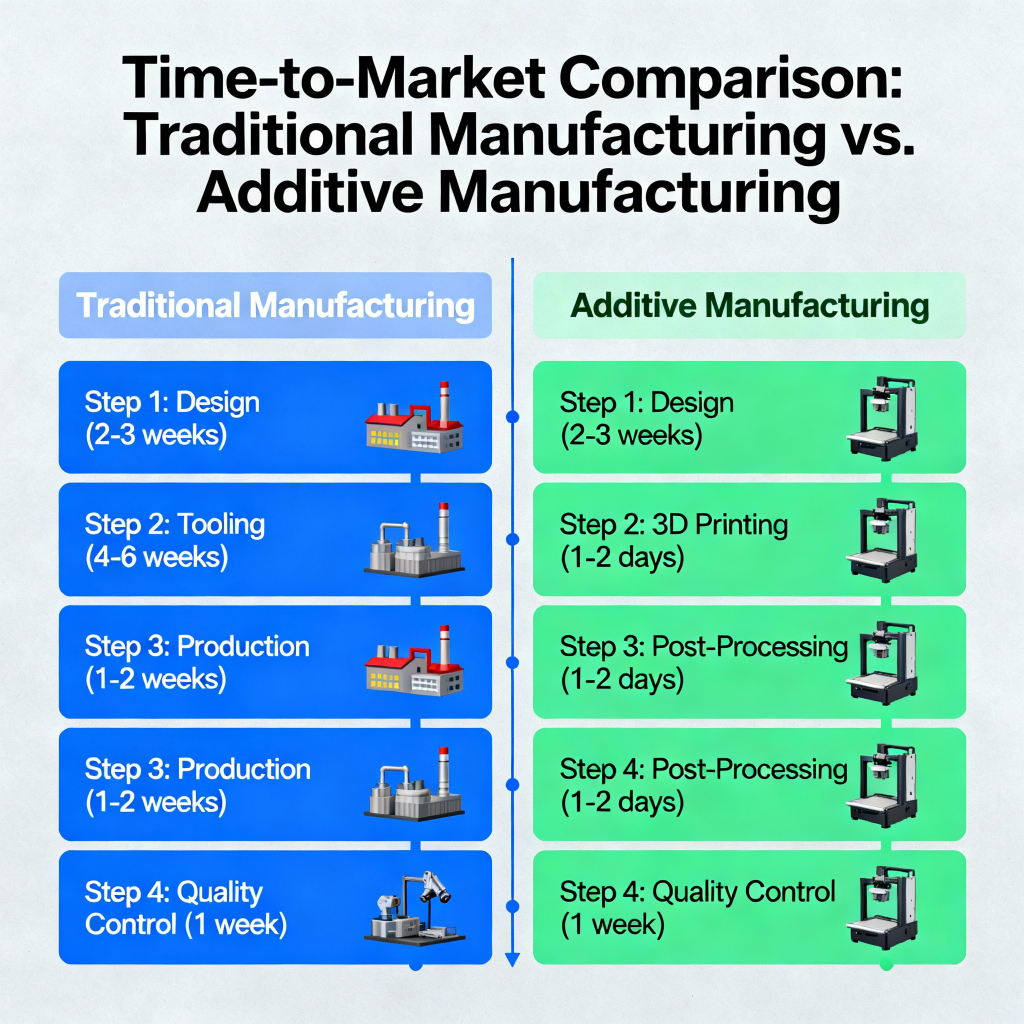
5.1 Time-to-Market Acceleration
Traditional medical device development timeline:
-
Design & prototyping: 6-8 months
-
Tooling & manufacturing setup: 4-6 months
-
Clinical trials & validation: 12-18 months
-
Regulatory approval: 6-12 months
-
Total: 28-44 months
AM-enabled development timeline:
-
Design & prototyping: 2-3 months (rapid iteration)
-
Manufacturing setup: 0-1 month (no tooling required)
-
Clinical trials & validation: 8-12 months (earlier start)
-
Regulatory approval: 6-12 months (parallel to trials)
-
Total: 16-28 months—a 40-50% reductio

5.2 Cost Structure Advantages
Low-Volume Economics
Traditional manufacturing requires expensive tooling ($50,000-$500,000 per implant design), economical only at production volumes >1,000 units. AM has minimal setup costs, making production viable at:
-
1-10 units: Custom patient-specific implants
-
10-100 units: Clinical trial batches
-
100-1,000 units: Niche market products
Material Cost Reduction
While AM metal powder ($80-150/kg for Ti6Al4V) costs more than raw bar stock ($30-50/kg), the 70% material utilization rate vs. 15-30% for machining results in net material cost savings of 25-40% for complex geometries.
Labor Efficiency
Automated AM processes reduce direct labor requirements by 60-75% compared to multi-step machining operations, with 24/7 unattended operation capability.
5.3 Clinical Outcome Improvements
Mayo Clinic documented measurable patient benefits from 3D-printed surgical guides and implants:
-
30% reduction in operating room time (reduced anesthesia exposure)
-
25% decrease in post-operative complications
-
40% faster recovery times for complex reconstructions
-
Greater organ and limb preservation in oncology cases (avoiding amputations)
Stryker reports that surgeons using their porous titanium AM implants observe:
-
Enhanced osseointegration within 6-12 weeks post-surgery
-
15-20% lower revision rates over 10-year follow-up compared to solid implants
-
Improved patient satisfaction scores due to better anatomical fit
These advantages sound compelling, but every transformative technology faces obstacles. Let’s examine the technical challenges and proven solutions.
6. Overcoming Technical Challenges: Solutions from Industry Leaders
Responsible medical device development requires acknowledging challenges and implementing validated solutions. Here’s how industry leaders are addressing AM’s key technical hurdles.
6.1 Challenge: Mechanical Property Consistency
The Issue
AM parts can exhibit anisotropic mechanical properties—strength varies depending on build direction due to layer-by-layer construction.
The Solution
Siemens Healthineers developed AI-enhanced simulation software that predicts property variations and automatically adjusts:
-
Build orientation to align maximum stress with strongest material direction
-
Laser parameters (power, speed, hatch spacing) to optimize density
-
Heat treatment protocols to homogenize microstructure
Result: <5% property variation across build orientations, meeting FDA requirements for implant mechanical specifications.
6.2 Challenge: Surface Quality and Biocompatibility
The Issue
As-printed metal surfaces exhibit Ra roughness of 15-25 μm, far rougher than machined surfaces (Ra <1 μm). Excessive roughness can harbor bacteria and inhibit bone integration.
The Solution
Multi-step post-processing protocols:
-
Chemical etching to remove partially-melted powder particles
-
Electropolishing to achieve Ra <6.3 μm on critical surfaces
-
Plasma spraying or hydroxyapatite coating to enhance bioactivity
-
Final sterilization via autoclave, gamma radiation, or EtO gas
GE Additive offers integrated post-processing solutions that maintain traceability throughout finishing operations—critical for Design History File documentation.
6.3 Challenge: Regulatory Pathway Complexity
The Issue
AM medical devices face unique regulatory scrutiny around process validation and batch-to-batch consistency.
The Solution
The FDA incorporated ISO 13485:2016 into 21 CFR Part 820 (effective February 2026), harmonizing U.S. and international standards. This enables:
-
Single Quality Management System (QMS) for global markets
-
Leveraging ISO 13485 certification for FDA compliance
-
Participation in MDSAP (Medical Device Single Audit Program) for streamlined audits across 5 regulatory authorities
PSH Design maintains documented AM process validation protocols that satisfy both FDA 510(k) and EU MDR requirements, reducing regulatory burden for clients.
6.4 Challenge: Scaling Production
The Issue
Moving from clinical trial volumes (10-50 units) to commercial production (1,000+ units annually) requires reproducible processes and quality systems.
The Solution
EOS industrial AM systems feature:
-
Automated powder handling and recycling systems
-
Integrated quality monitoring with statistical process control
-
Digital thread connectivity from CAD through production to inspection
-
Multi-laser configurations enabling 4-8x throughput on a single platform
PSH Design operates validated production-scale AM equipment capable of supporting both clinical trial and commercial manufacturing phases without process transfer complications.
Theory and technical capabilities mean little without clinical validation. Let’s examine real-world case studies demonstrating measurable patient impact.
7. Real-World Success Stories: Proven Clinical Impact
These case studies demonstrate how AM technology translates into tangible improvements in patient outcomes, surgical efficiency, and healthcare economics.
7.1 3D Systems: Restoring Lives Through Cranial Reconstruction
The Challenge
A 45-year-old patient with aggressive osteosarcoma required removal of 40% of the skull, leaving massive cranial defects. Traditional reconstruction using titanium mesh provided inadequate protection and poor cosmetic results.
The AM Solution
3D Systems designed a patient-specific titanium cranial implant based on pre-operative CT scans, precisely matching:
-
Pre-disease skull contours for natural appearance
-
Screw hole positions for optimal fixation
-
Integrated channels for vascularization
The Outcome
-
Surgery time reduced from 8 hours to 4.5 hours
-
Perfect aesthetic restoration
-
Zero complications at 24-month follow-up
-
Patient returned to normal activities within 3 months
7.2 Materialise: Transforming European Cardiac Care
The Challenge
Standard-size atrial appendage occlusion devices for stroke prevention in atrial fibrillation patients resulted in 15% procedural failures and frequent peri-device leakage.
The AM Solution
Materialise partnered with 12 European cardiac centers to provide patient-specific atrial appendage occlusion devices customized to individual cardiac anatomy.
The Outcomes (200+ patients)
-
98% procedural success rate (vs. 85% for standard-size devices)
-
50% reduction in peri-device leakage at 6-month follow-up
-
35% shorter procedure times due to better device sizing
-
Projected €3.2 million annual savings across participating hospitals from reduced complications
7.3 Stryker: Advancing Spinal Surgery Outcomes
The Challenge
Traditional solid PEEK spinal cages exhibited poor fusion rates (78%) and high subsidence (cage sinking into vertebrae), leading to revision surgeries.
The AM Solution
Stryker’s AMagine™ porous titanium spinal cages combine:
-
Bone-mimicking porosity (60-80% void fraction) for osseointegration
-
Optimized stiffness (10-15 GPa) to prevent stress shielding
-
Integrated fixation features reducing hardware requirements
The Outcomes (1,200+ patients)
-
92% fusion rate at 12 months (vs. 78% for solid PEEK cages)
-
68% reduction in subsidence (cage sinking into vertebrae)
-
Significant improvement in patient-reported outcomes (ODI, VAS scores)
-
Revision rate of only 3.2% at 5-year follow-up
7.4 Mayo Clinic: Pioneering Personalized Orthopedic Oncology
The Challenge
11-year-old patient London Secor faced leg amputation for a rare pelvic tumor. Conventional surgery could not preserve the hip joint while achieving complete tumor resection.
The AM Solution
Mayo Clinic’s Anatomic Modeling Unit (AMU) team:
-
Created precise 3D model of tumor and surrounding anatomy from MRI
-
Designed tumor-specific surgical approach preserving hip joint
-
Produced custom cutting guides and patient-matched implant
-
Pre-bent fixation plates to exact anatomical contours
The Outcome
-
Limb-sparing surgery successfully completed—amputation avoided
-
Minimal blood loss due to precise surgical planning
-
Full weight-bearing achieved at 8 weeks post-surgery
-
Return to normal childhood activities within 6 months
The AMU documents that 3D planning and custom implants deliver:
-
Better intuitive understanding of complex anatomy for surgeons
-
Higher patient confidence when visualizing their specific implant
-
Greater organ/limb preservation rates in oncology cases
These successes represent current state-of-the-art, but the technology continues evolving rapidly. What innovations will define the next generation of AM medical devices?
8. The Future of Additive Manufacturing in Healthcare: Next-Generation Innovations
Understanding emerging trends helps medical device companies position themselves for long-term success in this rapidly evolving field.
8.1 AI-Driven Design and Quality Control
Artificial intelligence is transforming every stage of AM medical device development:
Generative Design
AI algorithms explore thousands of design variations in hours, identifying optimal geometries that human engineers might never conceive. Autodesk Fusion 360 and nTopology software generate lattice structures that achieve:
-
Maximum strength-to-weight ratios
-
Customized mechanical properties matching patient bone density
-
Integrated features (drug reservoirs, sensor pockets) without manual design
Predictive Quality
Machine learning models trained on millions of AM builds can:
-
Predict defect probability before printing based on geometry analysis
-
Adjust process parameters in real-time during builds
-
Achieve >99.5% first-time-right success rates, reducing waste
8.2 Bioprinting and Regenerative Medicine
The next frontier: 3D printing living tissues and organs.
Current Capabilities
-
Bioink formulations containing living cells suspended in hydrogel matrices
-
Printed skin grafts for burn victims achieving 85% take rate
-
Bone scaffolds seeded with patient stem cells promoting regeneration
-
Vascularized tissue constructs with integrated blood vessel networks
Research Pipeline (5-10 year horizon)
-
Bioprinted heart valves eliminating need for mechanical or xenograft replacements
-
Kidney organoids for dialysis patients
-
Liver tissue for drug toxicity testing and metabolic disease treatment
Leading researchers at Wake Forest Institute, ETH Zurich, and Materialise are advancing bioprinting toward clinical reality.
8.3 Multi-Material and Hybrid Manufacturing
Future implants will integrate multiple materials in single builds:
Graded Structures: Titanium core for strength → Intermediate titanium-PEEK blend → Outer PEEK layer for soft tissue interface. Eliminates stress concentration at material boundaries.
Embedded Sensors: Printing conductive traces and piezoelectric elements directly into implants enables:
-
Real-time load monitoring to detect loosening before symptoms appear
-
Osseointegration tracking via impedance measurements
-
Drug-releasing capabilities with controlled-release coatings
Hybrid AM-Machining: Combining additive and subtractive processes on a single platform achieves:
-
Complex internal geometries via AM
-
Precision external surfaces via CNC machining
-
Reduced post-processing and improved dimensional accuracy
8.4 Distributed Manufacturing and Point-of-Care Production
The ultimate vision: hospital-based AM facilities producing devices on-demand.
Potential Benefits
-
Same-day custom implants for emergency trauma cases
-
Elimination of inventory costs and supply chain vulnerabilities
-
Rapid iteration based on intra-operative findings
-
Developing world access to advanced medical devices without international shipping
Regulatory Evolution Needed: FDA and international authorities are developing frameworks for decentralized manufacturing that maintain quality standards while enabling local production.
These future innovations will require extensive clinical validation. This brings us to a critical competitive advantage: access to efficient, cost-effective clinical trial infrastructure—an area where Vietnam is emerging as a global leader.
9. Vietnam’s Strategic Advantage: Clinical Trial Excellence for Global Medical Device Innovation
For medical device developers, clinical validation represents the longest and most expensive phase of product development. Vietnam offers a compelling solution that combines speed, cost-efficiency, and clinical rigor.
9.1 Why Vietnam is Emerging as a Global Clinical Trial Hub
Vietnam presents a unique convergence of factors making it exceptionally attractive for medical device clinical trials:
Factor #1: Rapidly Modernizing Healthcare Infrastructure
Vietnam’s healthcare system is undergoing unprecedented transformation:
-
Investment surge: Healthcare spending increased 12.5% annually from 2020-2025
-
Hospital expansion: 50+ new internationally-accredited facilities since 2020
-
Technology adoption: Advanced imaging (MRI, CT), surgical robotics, and digital health records now standard at major centers
-
Skilled workforce: Over 150,000 physicians and surgeons, many trained in U.S., EU, and Japanese institutions
Factor #2: Cost-Effective Clinical Trial Execution
Vietnam offers 30-50% lower clinical trial costs compared to Western markets:
-
Principal investigator fees: $5,000-15,000 per study (vs. $30,000-60,000 in U.S.)
-
Patient recruitment costs: $300-800 per patient (vs. $2,000-5,000 in U.S.)
-
Site monitoring: $800-1,500/day (vs. $2,500-4,000 in U.S.)
-
Total study cost reduction: Typical Phase II/III device trial costs $800,000-1.5M in Vietnam vs. $2.5-4M in U.S.
Factor #3: Faster Regulatory Timelines
Vietnam’s Administration of Science, Technology and Training (ASTT) under the Ministry of Health streamlines approvals:
-
Clinical trial approval: Average 160 days from submission to first patient enrolled
-
Parallel ethics review: Institutional review boards (CEBRGLs) and national ethics committee (NECBR) operate concurrently
-
Regulatory flexibility: Pragmatic approach to novel technologies like AM devices
-
Comparison: EU requires 180-240 days average, U.S. FDA 210-300 days
Factor #4: Treatment-Naïve Patient Population
Vietnam’s 100 million population with growing chronic disease burden provides:
-
Large recruitment pool: Easier patient enrollment, faster trial completion
-
Treatment-naïve subjects: Many patients have not received prior advanced interventions, reducing confounding variables
-
Diverse demographics: Urban/rural, genetic variation across ethnic groups provides robust data
-
High compliance rates: Cultural factors contribute to >90% patient retention in trials
Factor #5: Strategic Geographic Position
Vietnam serves as gateway to ASEAN markets (650 million people, $3.6 trillion GDP):
-
Clinical data accepted across Southeast Asian regulatory authorities
-
English-language proficiency facilitates international collaboration
-
Time zone alignment enables real-time communication with U.S. and EU sponsors
9.2 PSH Design’s Unique Clinical Trial Ecosystem
PSH Design has established exclusive partnerships with Vietnam’s top three hospital networks, creating an integrated design-to-validation pathway that no competitor can replicate.
Partnership #1: Major Metropolitan Tertiary Care Center (10,000+ beds)
Clinical Specializations:
-
Complex orthopedic reconstruction (3,500+ joint replacements annually)
-
Trauma surgery (Level I equivalent trauma center)
-
Spine surgery (1,200+ procedures annually)
AM Clinical Trial Infrastructure:
-
Dedicated orthopedic research unit with 15 clinical investigators
-
On-site biomechanics laboratory for implant performance testing
-
CT/MRI imaging protocols optimized for AM implant assessment
-
Patient database of 50,000+ orthopedic cases for retrospective analysis
Recent Success: Titanium Hip Cup Redesign Trial
-
45 patients enrolled over 6 months (target: 40)
-
Primary endpoint (osseointegration) met at 6 months in 93% of patients
-
Zero device-related adverse events
-
Data package used for CE marking approval and pending FDA 510(k)
Partnership #2: Leading Neurosurgery and Craniofacial Center
Clinical Specializations:
-
Neurosurgery (2,800+ cranial procedures annually)
-
Maxillofacial reconstruction (1,500+ cases annually)
-
Skull base surgery
AM Clinical Trial Infrastructure:
-
Craniofacial implant registry tracking outcomes on 300+ patients
-
3D surgical planning lab with in-house modeling capabilities
-
Dedicated AM research coordinator managing multiple concurrent studies
-
Long-term follow-up infrastructure (>95% retention at 2 years)
Recent Success: Custom Cranial Implant Validation Study
-
30 patients with large skull defects (trauma, tumor resection)
-
Patient-specific titanium implants designed by PSH, manufactured in 14 days average
-
Outcomes: 100% successful reconstruction, excellent cosmetic results, mean OR time reduced 35% vs. traditional reconstruction
-
Regulatory achievement: Data submitted for Vietnam MOH approval for commercial use
Partnership #3: Specialized Dental and Oral Surgery Institute
Clinical Specializations:
-
Dental implantology (8,000+ implants placed annually)
-
Jaw reconstruction
-
TMJ surgery
AM Clinical Trial Infrastructure:
-
Digital dentistry infrastructure: Intraoral scanners, CBCT imaging, CAD/CAM lab
-
Rapid patient recruitment: Large patient flow enables fast enrollment
-
Standardized protocols: ISO-compliant clinical assessment methods
-
Cost-effectiveness studies: Health economics research unit
Recent Success: PEEK Dental Implant Abutment Study
-
80 patients receiving AM-customized abutments vs. standard titanium controls
-
Endpoints: Soft tissue response, mechanical stability, patient satisfaction
-
12-month results: AM abutments showed superior gingival aesthetics (blinded evaluator scores), equivalent mechanical performance
-
Commercial impact: Data enables premium pricing for customized abutments
9.3 Vietnam’s Biological Diversity: Strategic Value for Global Markets
Southeast Asian populations exhibit distinct biological characteristics that make Vietnam trials particularly valuable for global device registration:
Anatomical Variations:
-
Bone morphology: Asian femurs typically have smaller canal diameters and different neck-shaft angles than Caucasian populations
-
Soft tissue: Different skin thickness, collagen structure affect healing
-
Dental anatomy: Root morphology, jaw dimensions vary significantly
Disease Profiles:
-
Higher prevalence of hepatitis B, tuberculosis requires assessment of implant performance in these patient contexts
-
Metabolic differences: Vitamin D levels, bone density parameters differ from Western populations
-
Genetic variation: Polymorphisms affecting drug metabolism, healing responses
Clinical Trial Advantages:
-
Implants validated in diverse Asian populations have stronger evidence base for global registration
-
Regulatory authorities increasingly require ethnic diversity in clinical data
-
Single trial in Vietnam can generate data applicable to 2+ billion potential patients across Asia
9.4 Integrated Design-to-Approval Workflow
PSH Design’s hospital partnerships enable seamless progression from concept to commercial launch:
Stage 1: Concept Development (Months 1-3)
-
Client presents clinical need
-
PSH Design engineers collaborate with surgeon partners to define requirements
-
Initial CAD designs reviewed by clinical investigators
-
Deliverable: Design specification document approved by all stakeholders
Stage 2: Prototype Production & Pre-Clinical Testing (Months 4-6)
-
AM prototypes manufactured at PSH facility
-
Mechanical testing per ISO 14801 (fatigue), ASTM F1717 (construct stiffness)
-
Biocompatibility assessment per ISO 10993 at partner labs
-
Surgeon review using 3D models and cadaver testing
-
Deliverable: Validated prototype ready for first-in-human use
Stage 3: Clinical Trial Execution (Months 7-18)
-
Ethics approval via partner hospital CEBRGLs and NECBR (60-90 days)
-
ASTT clinical trial authorization (90-120 days)
-
Patient enrollment (typically 4-8 months for 30-50 patient studies)
-
Surgical procedures, follow-up assessments
-
Real-time data monitoring, safety oversight
-
Deliverable: Clinical study report with complete efficacy and safety data
Stage 4: Regulatory Submission & Commercialization (Months 19-24)
-
Compilation of Design History File with all documentation
-
Vietnam MOH registration for domestic market
-
CE marking technical file preparation for EU
-
FDA 510(k) pre-submission meeting and full submission for U.S.
-
Deliverable: Market approvals enabling global commercialization
Total Timeline: 18-24 months from concept to commercial launch—versus 36-48 months for traditional U.S./EU-only pathway.
9.5 Economic Impact: Localizing Medical Technology Innovation
PSH Design’s Vietnam-based AM capabilities deliver broader economic benefits beyond individual device development:
Import Substitution: Vietnam currently imports 85-90% of medical devices, spending $2+ billion annually. Domestic AM production of implants and instruments:
-
Reduces healthcare system costs by 40-60% vs. imported equivalents
-
Improves access for underserved populations
-
Builds national technological capabilities
Technology Transfer:
-
PSH Design trains Vietnamese engineers in advanced AM design and manufacturing
-
Hospital partnerships develop local clinical research capacity
-
Creates high-value knowledge economy jobs
Regional Hub Development:
-
Vietnam’s success attracts international medical device companies establishing regional R&D centers
-
ASEAN market integration enables export to 10+ countries with simplified regulatory requirements
-
Positions Vietnam as Asia-Pacific center for personalized medicine
Government Support:
-
Vietnam Ministry of Health prioritizes medical device innovation in national healthcare strategy
-
Investment incentives: Tax holidays, expedited approvals for innovative technologies
-
Public-private partnerships for clinical research infrastructure
Vietnam’s clinical trial advantages only translate into commercial success when combined with rigorous regulatory compliance. Let’s examine the regulatory landscape for AM medical devices.
10. Regulatory Compliance: Navigating Global Requirements
Regulatory approval represents the final gatekeeper between innovative medical devices and patient access. Understanding compliance requirements is essential for successful commercialization.
10.1 FDA Requirements for Additive Manufactured Devices
The FDA’s integration of ISO 13485:2016 into 21 CFR Part 820 (effective February 2026) represents the most significant regulatory update in decades, harmonizing U.S. requirements with international standards.
Five Key Requirements:
-
Quality Management System: Comprehensive QMS covering all operations from design through post-market surveillance
-
Design Controls: Formal processes for design input, output, verification, validation per 21 CFR 820.30
-
Process Validation: Demonstrating AM process produces consistent results meeting specifications
-
Traceability: Lot/serial tracking of powder material, build parameters, post-processing
-
Design History File: Complete documentation of design evolution and decision rationale
PSH Design’s Compliance Framework:
-
Validated AM processes with documented IQ/OQ/PQ protocols
-
Electronic DHF system with 21 CFR Part 11 compliant audit trails
-
Design review procedures involving multidisciplinary teams
-
Risk management per ISO 14971 integrated throughout design process
510(k) Pathway for AM Devices
Most AM orthopedic and dental implants qualify for 510(k) clearance based on substantial equivalence to predicate devices. PSH Design supports clients with:
-
Predicate device identification and comparison analysis
-
Biocompatibility testing per FDA guidance and ISO 10993
-
Mechanical testing demonstrating equivalence or superiority
-
Clinical data from Vietnam trials (FDA increasingly accepts international data)
-
Submission preparation including all required sections and supporting documentation
10.2 EU MDR Compliance
The EU Medical Device Regulation (MDR 2017/745) implemented May 2021 significantly increased requirements compared to previous directives.
Classification and Requirements
Most AM implants are Class IIb or III devices requiring:
-
Notified Body involvement for conformity assessment
-
Clinical evaluation report demonstrating safety and performance
-
Post-market surveillance plan with periodic safety update reports (PSURs)
-
Technical documentation per Annex II including detailed AM process description
PSH Design’s EU Compliance Support:
-
Preparation of technical files meeting MDR Annex II requirements
-
Clinical evaluation per MEDDEV 2.7/1 Rev 4 guidance
-
Coordination with Notified Bodies (TÜV SÜD, BSI, others)
-
Post-market surveillance systems capturing real-world performance data
-
EU Authorized Representative services for non-EU manufacturers
10.3 ISO Standards Ecosystem for AM Medical Devices
Multiple ISO and ASTM standards govern AM medical device development:
Quality and Risk Management:
-
ISO 13485:2016 – Quality management systems for medical devices
-
ISO 14971:2019 – Risk management application
-
ISO 10993 series – Biological evaluation of medical devices
Materials and Processes:
-
ISO 5832-3 – Metallic materials, titanium 6-aluminum 4-vanadium alloy
-
ASTM F2924 – Standard specification for AM titanium-6 aluminum-4 vanadium
-
ASTM F3001 – Standard specification for AM titanium alloy implants
AM-Specific Standards:
-
ISO/ASTM 52900 – Additive manufacturing terminology
-
ISO/ASTM 52921 – Standard terminology for AM coordinate systems
PSH Design maintains current testing protocols aligned with all relevant standards, ensuring client devices meet international requirements.
With technology, clinical validation, and regulatory compliance addressed, the final question remains: Who is your implementation partner? Let’s explore what PSH Design brings to the table.
11. PSH Design: Your Partner from Concept to Commercial Success
Transforming innovative medical device concepts into commercially successful products requires more than technical expertise—it demands an integrated partner who can navigate every phase of development.
11.1 Comprehensive Additive Manufacturing Capabilities
Design Engineering Services
-
Concept development from clinical needs assessment to functional requirements
-
CAD modeling using Siemens NX, SolidWorks, and medical-specific software
-
Topology optimization using nTopology, Altair Inspire for lightweight structures
-
FEA simulation for mechanical performance validation
-
Design for Manufacturing ensuring printability and quality
Advanced Manufacturing Infrastructure
-
Metal AM systems: EOS M 290 (DMLS), powder bed fusion for titanium and cobalt-chrome
-
Polymer AM: FDM and SLS systems for PEEK and biocompatible polymers
-
Material expertise: Medical-grade Ti6Al4V, CoCr, PEEK with full traceability
-
Process control: In-situ monitoring, quality assurance throughout builds
-
Capacity: Production-scale operations supporting clinical trials through commercial volumes
Post-Processing & Finishing
-
Heat treatment and stress relief per ASTM standards
-
CNC machining for precision surfaces and tight tolerances
-
Surface treatments: Electropolishing, plasma spraying, hydroxyapatite coating
-
Inspection: CMM dimensional verification, CT scanning for internal analysis
-
Sterilization: Validated autoclave, EtO, and gamma radiation protocols
11.2 Regulatory and Clinical Services
Regulatory Consulting
-
Strategy development: Optimal pathway selection (510(k), PMA, CE marking)
-
Documentation preparation: Design History Files, technical files, risk management reports
-
Testing coordination: Biocompatibility, mechanical, clinical studies
-
Submission management: FDA and EU regulatory interactions
-
Post-market compliance: Vigilance, PSURs, annual updates
Clinical Trial Management
-
Protocol development with experienced clinical investigators
-
Ethics approvals through established hospital partnerships
-
Patient recruitment leveraging partner hospital patient populations
-
Data collection and monitoring per ICH-GCP standards
-
Statistical analysis and clinical study report preparation
-
Regulatory-ready deliverables supporting global market approvals
11.3 Six Compelling Reasons to Choose PSH Design
Reason #1: Integrated Capabilities
Single partner from concept through commercialization eliminates coordination complexity and accelerates timelines. No need to manage separate design firms, manufacturers, CROs, and regulatory consultants.
Reason #2: Unmatched Clinical Trial Access
Exclusive hospital partnerships provide speed and efficiency for device validation that no competitor can match. Our surgeons are co-investigators and key opinion leaders, providing clinical credibility.
Reason #3: Superior Cost-Effectiveness
Vietnam-based operations deliver international-quality engineering and manufacturing at 40-60% lower costs than U.S. or EU alternatives. Clinical trials particularly benefit from this advantage.
Reason #4: Deep Regulatory Expertise
Extensive experience with FDA 510(k), EU MDR, and Asian regulatory authorities ensures compliant pathways to all major markets.
Reason #5: Flexibility and Responsiveness
As a mid-sized organization, PSH Design provides senior engineering attention to every project with rapid decision-making and iterative collaboration—no bureaucratic delays.
Reason #6: Proven Track Record
16+ years in medical device design, successful regulatory approvals, and satisfied clients across orthopedic, dental, and surgical instrument sectors.
11.4 Client Success Model: Who We Serve
Medical Device Companies
Established manufacturers seeking AM capabilities without capital investment in equipment and expertise. We serve as your design and manufacturing partner for new product development.
Startups and Entrepreneurs
Innovators with clinical insights needing full-service support to bring concepts to market. Our integrated capabilities de-risk your development and accelerate commercialization.
Healthcare Systems and Surgeons
Clinical innovators who have identified unmet needs and want to develop novel solutions. We provide the engineering, manufacturing, and regulatory expertise to realize your vision.
International Companies Entering Asian Markets
Global manufacturers seeking cost-effective clinical data and ASEAN market entry. Our Vietnam presence and regulatory knowledge facilitate regional expansion.
The path from innovative concept to commercial medical device is complex, but with the right partner, it becomes navigable and achievable.
12. Take the Next Step: Transform Your Medical Device Innovation
The convergence of additive manufacturing technology, personalized healthcare demands, and Vietnam’s clinical trial advantages creates an unprecedented opportunity for medical device innovation.
Whether you’re developing next-generation implants, surgical instruments, or exploring novel applications of AM technology, PSH Design provides the expertise, infrastructure, and partnerships to accelerate your success.
Ways to Engage with PSH Design
💡 Contact & Request a Detailed Quote in Link : https://pshdesign.com/rfq-free-test-project/
Provide your project specifications for a comprehensive proposal including:
-
Design and engineering scope
-
Manufacturing approach and timeline
-
Clinical trial strategy (if applicable)
-
Regulatory pathway and approvals
-
Complete project cost estimate
Contact Information
PSH Design Co., Ltd.
Additive Manufacturing for Medical Devices
Design | Manufacturing | Clinical Trials | Regulatory Support
CEO: Bùi Ngọc Phương
Email: phuong@pshdesign.com
Website: www.pshdesign.com
Linkedin : https://www.linkedin.com/in/phuongpsh/