CAD Kernel Technology & Reverse Engineering Solutions for 3D Design
CAD Kernel Technology & Reverse Engineering Solutions for 3D Design
Introduction
A CAD Kernel is the core component (also known as the “engine”) of computer-aided design (CAD) software. It serves as the foundational software responsible for processing, creating, displaying, and manipulating 2D and 3D geometric entities within the CAD environment. All operations such as drawing, solid modeling, trimming, editing, and geometric analysis are performed through the CAD Kernel.
Some prominent kernels in the CAD industry include Parasolid (used in SolidWorks, NX, etc.), ACIS (for AutoCAD, BricsCAD, etc.), Granite (Creo), and OpenCASCADE (open-source). These kernels determine the modeling capabilities, accuracy, processing speed, and interoperability of geometry data among different software. Each CAD program typically integrates a specific kernel, and data exchange or CAD file conversion largely depends on the kernel the software uses. Therefore, the CAD Kernel is the “heart” of every modern 3D CAD software — much like an engine powers a car, it drives every geometric function of the software.
The Three “Hearts” of the 3D CAD World: ACIS, Parasolid, and CGM
In 3D design software, the three leading geometric kernels — ACIS, Parasolid, and CGM — form the foundation for hundreds of engineering programs worldwide. Each kernel has its own historical background and unique strengths, helping shape the modern design industry.
ACIS: The Pioneer with Wide Influence
-
Origin: 1989, developed by experts from Cambridge at Three-Space Ltd.
-
Development & Ownership: Acquired by Spatial, now part of Dassault Systèmes, in 2000.
-
Highlights: Object-oriented C++ architecture; one of the first widely licensed commercial kernels; has many forks like Autodesk ShapeManager (basis for Inventor, AutoCAD 3D) and PTC Creo Elements/Direct variants.
-
Applications: Besides traditional CAD, ACIS is widely used in architecture, manufacturing, metrology, simulation due to its flexible customization.
-
Key Users: Autodesk, PTC, Hexagon, Bricsys, IMSI, Siemens Mentor Graphics (EDA), LK, Mitutoyo.
Parasolid: Industry Standard & Broad Ecosystem
-
Origin: 1985, created by Shape Data Ltd. in the UK.
-
Development & Ownership: Currently Siemens Digital Industries Software’s flagship product.
-
Highlights: Embedded in hundreds of major CAD/CAM/CAE software globally; recognized as the “gold standard” for 3D geometric modeling; strong support for solid, surface, and convergent modeling (combining B-Rep & facets).
-
Data Exchange: Uses XT file format for efficient interoperability.
-
Key Users: Siemens NX, Solid Edge, SolidWorks, Onshape, MicroStation, IRONCAD, Shapr3D, and others.
CGM: Exclusive Power for Major Corporations
-
Origin: Officially integrated into CATIA V5 in 1999, developed by Dassault Systèmes (France).
-
Development & Ownership: Owned and primarily used by Dassault Systèmes within their product suite.
-
Highlights: Modern kernel redesigned under a “blank-page initiative” for demanding industries like aerospace, automotive, and heavy industrial equipment; excels in surface accuracy, large model management, and complex workflow optimization.
-
Licensing: Mainly internal use in CATIA, 3DEXPERIENCE but now available independently for select partners in robotics and manufacturing.
-
Key Users: Dassault CATIA, 3DEXPERIENCE, Stäubli Robotics, Mitsui Zosen.
The 3DEXPERIENCE platform, tightly integrated with CATIA, facilitates seamless collaboration, data sharing, and real-time design modification for multidisciplinary teams, enabling efficient workflows and cloud-based accessibility.
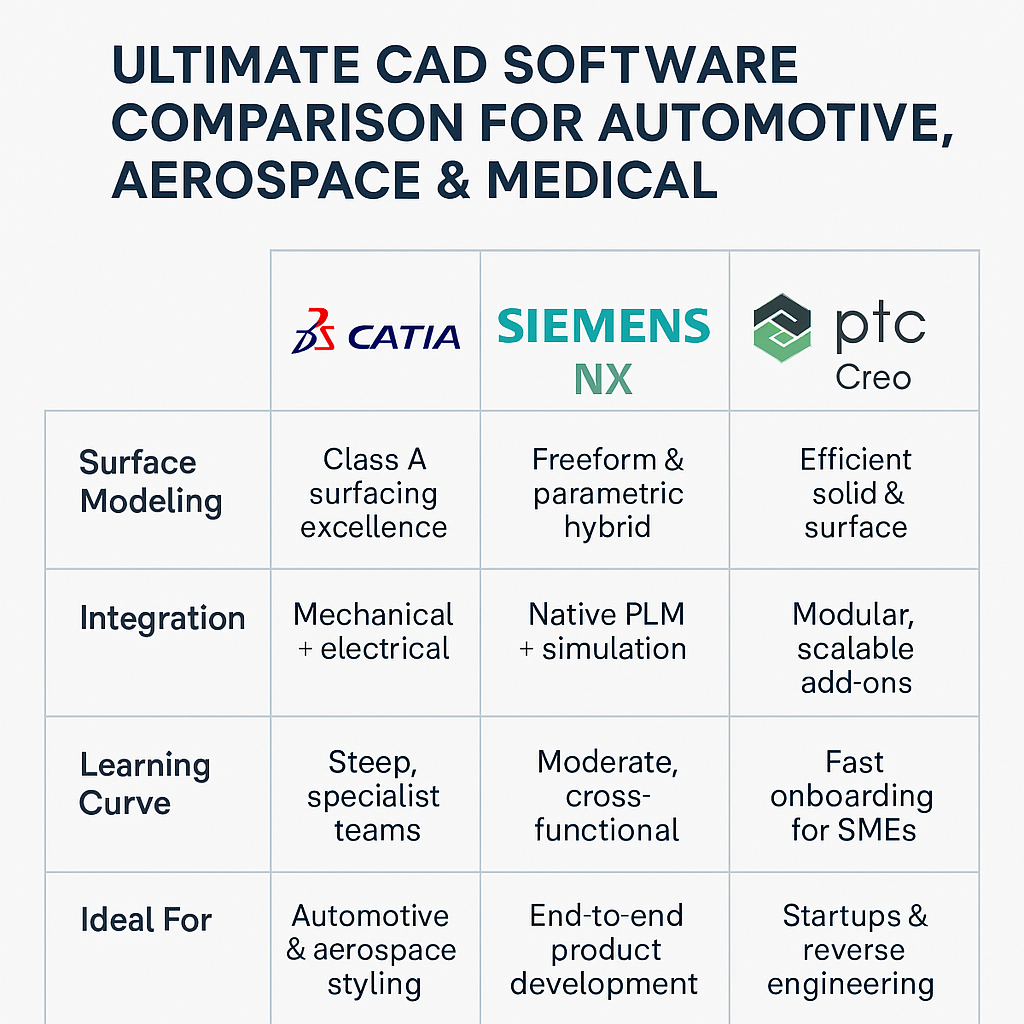
CATIA, powered by the CGM kernel, offers powerful capabilities and all the features required for advanced mechanical design, part design, and mechanical systems, making it a comprehensive software suite for engineering and manufacturing. Companies leverage CATIA and the 3DEXPERIENCE platform to achieve efficient project management, PLM integration, and scalable solutions for complex engineering projects across industries.
Quick Comparison Table of the Three Leading Kernels
|
Criterion |
ACIS |
Parasolid |
CGM |
|---|---|---|---|
|
Origin/History |
1989, Three-Space Ltd., UK (now Dassault) |
1985, Shape Data/SolidWorks/Siemens, UK |
1999, Dassault Systèmes, France |
|
Popularity |
Broad (many forks, flexible licensing) |
Widest (industry standard, 200+ users) |
Mostly Dassault internal, few partners |
|
Notable Applications |
AutoCAD, Inventor, Creo Elements/Direct, BricsCAD |
NX, Solid Edge, SolidWorks, Onshape, MicroStation |
CATIA, 3DEXPERIENCE, Stäubli Robotics |
|
Special Technology |
Diverse branches, highly customizable |
Robust, consistent, strong convergent modeling |
Optimized for surfaces & large assemblies, workflow integration |
|
Data Sharing |
Good but fragmented among branches |
Excellent; XT file is exchange standard |
Good within Dassault ecosystem |
|
Development Focus |
Expanding B2B in multiple industries |
Maintaining engineering industry standard |
Optimizing advanced industrial CAD workflows |
Introduction to CAD Kernel Technology in Modern Engineering
CAD kernel technology forms the backbone of modern computer-aided design, enabling engineers and designers to create, modify, and analyze digital models with exceptional precision. In platforms like CATIA, the CAD kernel delivers robust capabilities for 3D modeling, simulation, and detailed design, making it indispensable for industries such as mechanical engineering, automotive, and aerospace. This technology empowers users to tackle complex geometries and intricate assemblies, ensuring that even the most challenging engineering requirements are met with accuracy. By leveraging advanced CAD kernel technology, companies can optimize their design processes, enhance analysis, and enable the creation of innovative products across various industries. The result is a streamlined workflow that supports the development of high-quality assemblies and components, driving efficiency and enabling the realization of ambitious engineering projects.
Engineering Process and Data Management
Efficient engineering process and data management are essential for successful product development, especially in industries where complex assemblies and large datasets are the norm. CATIA offers a comprehensive solution that integrates engineering processes with advanced data management tools, facilitating seamless collaboration across teams and departments. With CATIA, organizations can manage design data effectively, maintain version control, and ensure that all stakeholders have access to the latest information. This level of data management is crucial for industries like automotive and aerospace, where the integrity of design data directly impacts product quality and time-to-market. By streamlining development processes and enabling real-time collaboration, CATIA helps teams bring new products to market faster, reduce errors, and maintain a competitive edge in demanding markets.
3D Modeling and Design
3D modeling and design are at the heart of modern product development, allowing companies to visualize, refine, and validate their concepts before moving to production. CATIA provides a powerful platform for 3D modeling, offering advanced features for creating complex geometries and intricate assemblies. Its generative shape design tools enable engineers to explore innovative forms and optimize designs for performance and manufacturability. This capability is particularly valuable in mechanical engineering, where the ability to model and simulate complex systems can lead to significant improvements in product quality and efficiency. By enabling the creation of detailed digital prototypes, CATIA reduces the reliance on physical prototypes, accelerates the development cycle, and supports the delivery of high-performance products across a range of industries.
Part Design and Engineering
CATIA offers a comprehensive suite of tools for part design and engineering, empowering users to tackle even the most complex geometries with precision and confidence. Through advanced generative shape design capabilities, engineers can optimize every aspect of their models, ensuring that mechanical systems are both innovative and manufacturable. CATIA’s robust software environment supports the entire design process, from initial concept to detailed engineering, and seamlessly integrates reverse engineering workflows for legacy parts or rapid product iteration.
Collaboration is at the core of CATIA’s approach, enabling teams to work together efficiently across departments and locations. The platform’s powerful capabilities streamline development processes, allowing users to iterate quickly, reduce errors, and accelerate time-to-market. Whether creating intricate components or refining existing designs, CATIA offers the flexibility and depth required to achieve engineering excellence. By leveraging these tools, companies can optimize their design strategies, enhance team efficiency, and deliver high-quality products that stand out in a competitive market.
Assembly Design and Complex Assemblies
Designing and managing complex assemblies is a critical aspect of product development, particularly in sectors like automotive and aerospace where products often consist of thousands of interconnected parts. CATIA excels in assembly design, providing a suite of tools that allow engineers to create, organize, and optimize large assemblies with ease. Its advanced features support the management of multiple components and sub-assemblies, ensuring that every part fits and functions as intended. By facilitating the creation of complex assemblies, CATIA helps companies reduce design errors, improve product quality, and streamline the development process. This comprehensive approach to assembly design enables organizations to tackle even the most challenging engineering projects with confidence and precision.
Large Assemblies and Product Data
Managing large assemblies and complex product data is a critical challenge in modern mechanical engineering, especially for industries like automotive and aerospace where intricate assemblies and detailed design are the norm. CATIA V5 stands out as a comprehensive solution, offering powerful capabilities for generative shape design, reverse engineering, and assembly design within a robust software suite. With CATIA V5, engineering teams can collaborate virtually, working seamlessly on complex geometries and optimizing designs throughout the development process.
The integration of CATIA V5 with the 3DExperience platform from Dassault Systèmes enables users to access all the features necessary for efficient project management, part design, and simulation. This scalable solution supports the management of large assemblies, sheet metal parts, and geometric dimensioning, making it ideal for companies that demand precision and flexibility. By leveraging these tools, organizations can streamline their engineering processes, reduce reliance on physical prototypes, and accelerate the development of new products.
CATIA V5’s advanced data management capabilities empower users to handle vast amounts of design data, manufacturing information, and simulation results. This comprehensive approach to data management ensures that teams can make informed decisions, maintain data integrity, and optimize every stage of the design process. The result is improved efficiency, greater innovation, and the ability to bring high-quality products to market faster.
In addition to its technical strengths, CATIA V5 offers a full range of services and support, including training, consulting, and ongoing maintenance. Users benefit from access to a global community, expert resources, and dedicated support, ensuring they can fully leverage the software’s features for their specific needs. Whether your focus is on mechanical design, assembly design, or product development, CATIA V5 provides the essential tools and support to help your company achieve precision, efficiency, and success in a competitive market. By choosing CATIA V5, you are enabling your team to innovate, optimize, and lead in your industry.
Product Design and Development
Product design and development are pivotal stages in the product lifecycle, requiring a blend of creativity, technical expertise, and rigorous testing. CATIA offers a powerful suite of tools that support every phase of product design, from initial concept through to digital prototyping and validation. Its capabilities enable designers to create detailed digital models, simulate real-world performance, and test their ideas before committing to physical prototypes. This not only reduces development costs and time but also enhances the quality and innovation of the final product. By leveraging CATIA’s advanced features, companies across various industries can optimize their product development processes, deliver superior products to market, and meet the evolving needs of their customers with greater efficiency and confidence.
3DExperience Platform and New Products
The 3DExperience platform from Dassault Systèmes is a scalable solution designed to transform how companies manage their product development processes. With CATIA at its foundation, the platform enables users to create, simulate, and optimize designs within a unified, collaborative environment. This integration supports a wide range of industries—including automotive, aerospace, and manufacturing—by providing comprehensive tools for engineering, design, and production.
By leveraging the 3DExperience platform, organizations can collaborate virtually, ensuring that all stakeholders remain aligned throughout the development process. The platform’s robust functionality allows teams to manage complex projects, streamline workflows, and bring new products to market faster while maintaining the highest standards of quality and performance. Its flexibility and scalability make it ideal for companies seeking to optimize their development processes, adapt to evolving market demands, and drive innovation across various industries. With the 3DExperience platform, users can confidently manage every stage of product development, from initial concept to final production, ensuring that new products meet both functional and market requirements.
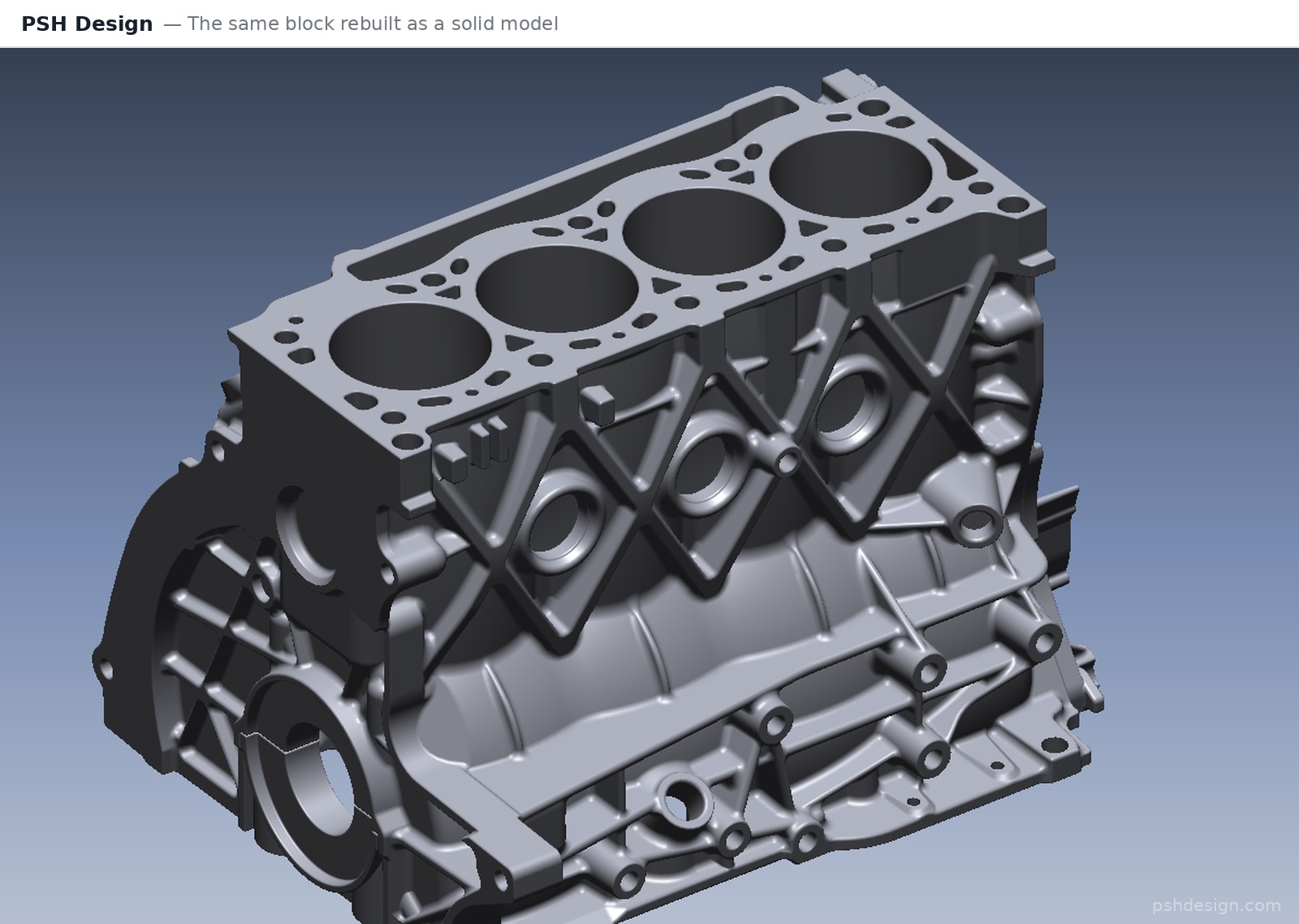
Considerations When Exchanging Native CAD Files Among Different Kernels
-
Kernel Differences: Each CAD software uses its own geometric kernel (e.g., Parasolid for SolidWorks, ACIS for AutoCAD, Granite for Creo), significantly affecting compatibility. File conversions among software with different kernels often result in data loss or slight geometry deviations.
-
Best Practice: Conversion within the same kernel family (native-to-native or native-to-kernel) preserves geometry quality best. For example, exchanging Parasolid (.x_t) or ACIS (.sat) files between software using the same kernel minimizes loss.
-
Neutral Formats: When exchanging data between different kernels, neutral formats like STEP (.stp, .step) or IGES (.igs, .iges) are widely used but may lose constraints, assembly structure, or small details.
-
Repair Tools: Some CAD software have import repair features to rebuild or fix geometry after neutral file imports, reducing errors. SolidWorks and Fusion 360 offer such functions.
-
Recommendations: Prefer exchanging native or kernel-specific files when possible. Otherwise, use STEP AP242 or QIF standards for better interoperability and model-based definition preservation.
Comprehensive solutions like CATIA and the 3DEXPERIENCE platform support PLM, project management, and product data management for large-scale and architectural design projects, ensuring efficient collaboration and data integrity.
Design and Engineering Services
CATIA design and engineering services provide companies with unparalleled access to advanced expertise and technical capabilities across the entire product development lifecycle. From initial part design to the assembly of complex systems, CATIA’s software suite supports every aspect of mechanical engineering and assembly design. These services enable organizations to create and manage intricate assemblies, perform detailed simulation and analysis, and ensure that every product meets stringent quality and functionality standards.
A key advantage of CATIA services is the support for geometric dimensioning and tolerancing, which guarantees that products are manufactured to exact specifications. This precision is essential for industries where reliability and compliance are non-negotiable. By utilizing CATIA’s powerful tools and services, companies can optimize their development processes, reduce time-to-market, and enhance product quality. The ability to access expert guidance and advanced software functionality ensures that teams can tackle even the most challenging engineering projects with confidence. Ultimately, CATIA design and engineering services empower organizations to innovate, compete effectively in the market, and deliver superior products that meet the demands of today’s industries.
Reverse Engineering Applications at PSH Design to Create Native Negative CAD Files
Professional reverse engineering requires expertise in modern scanning technology, data processing, and CAD modeling. PSH Design brings specialized capabilities in this field:
-
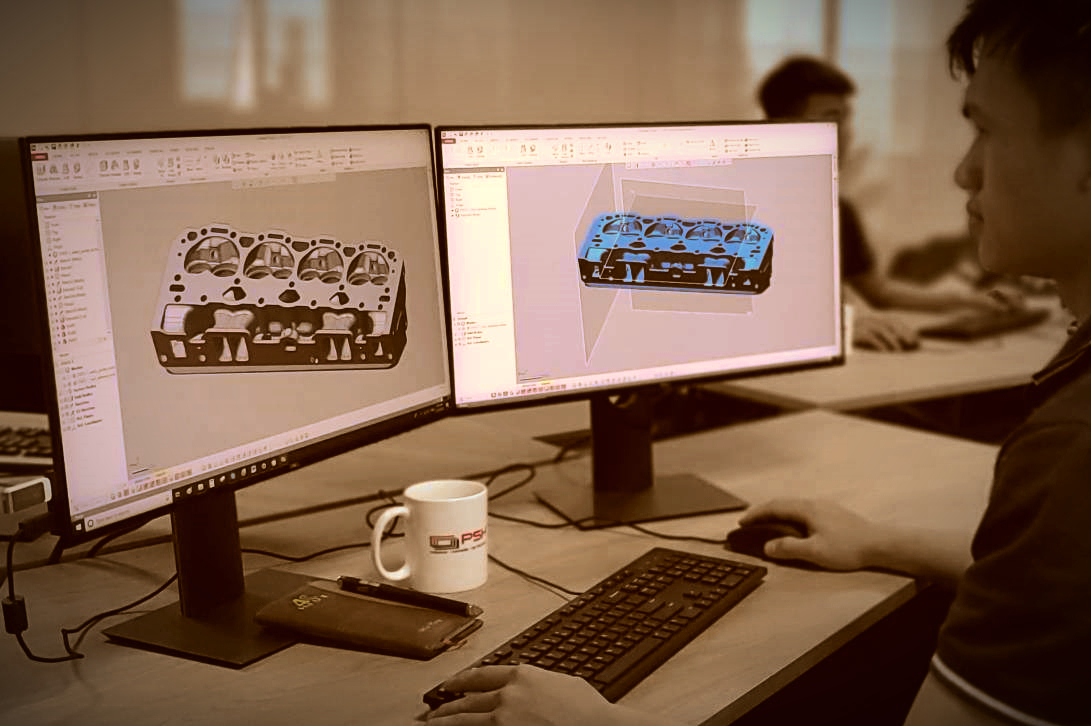
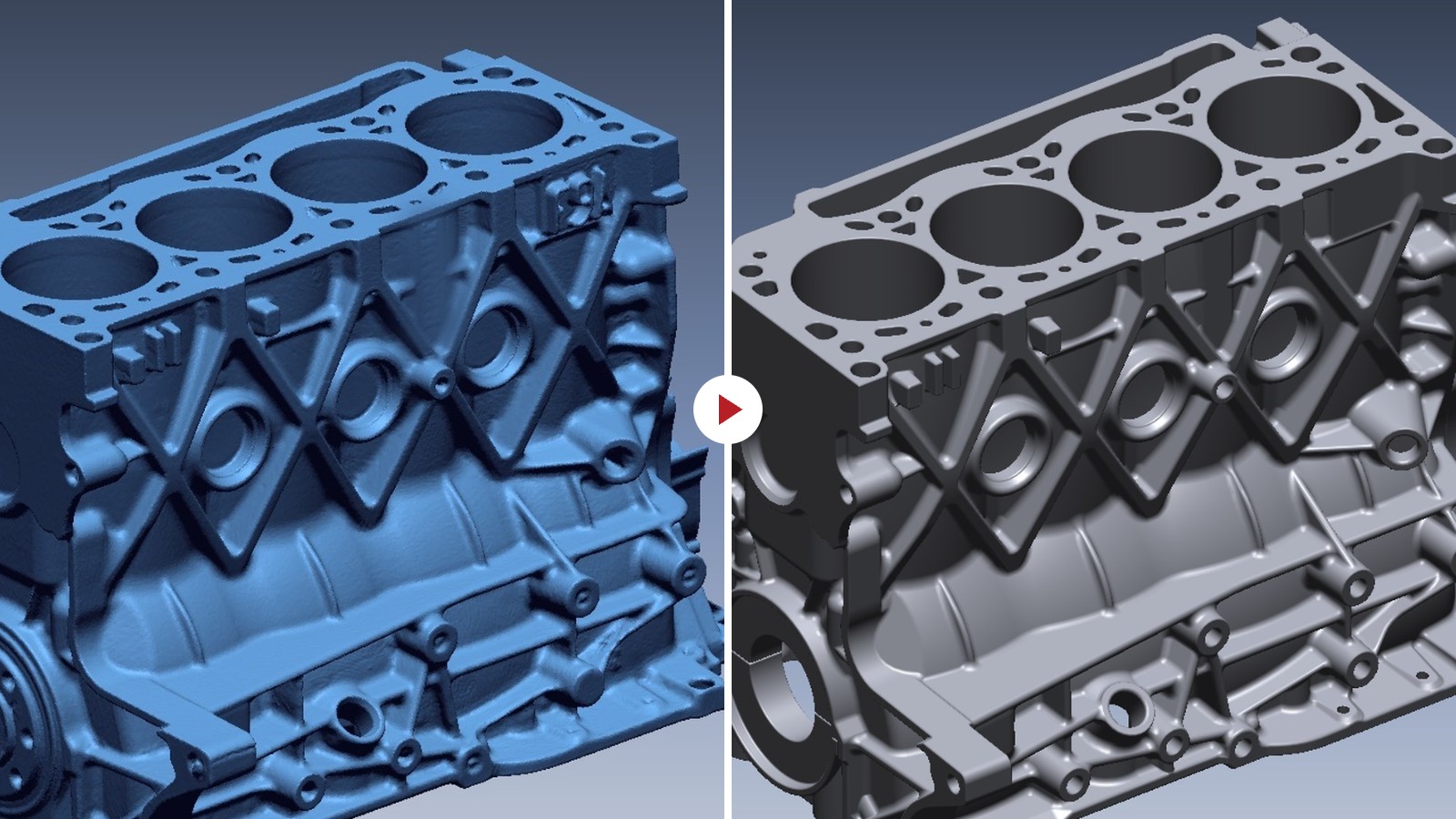
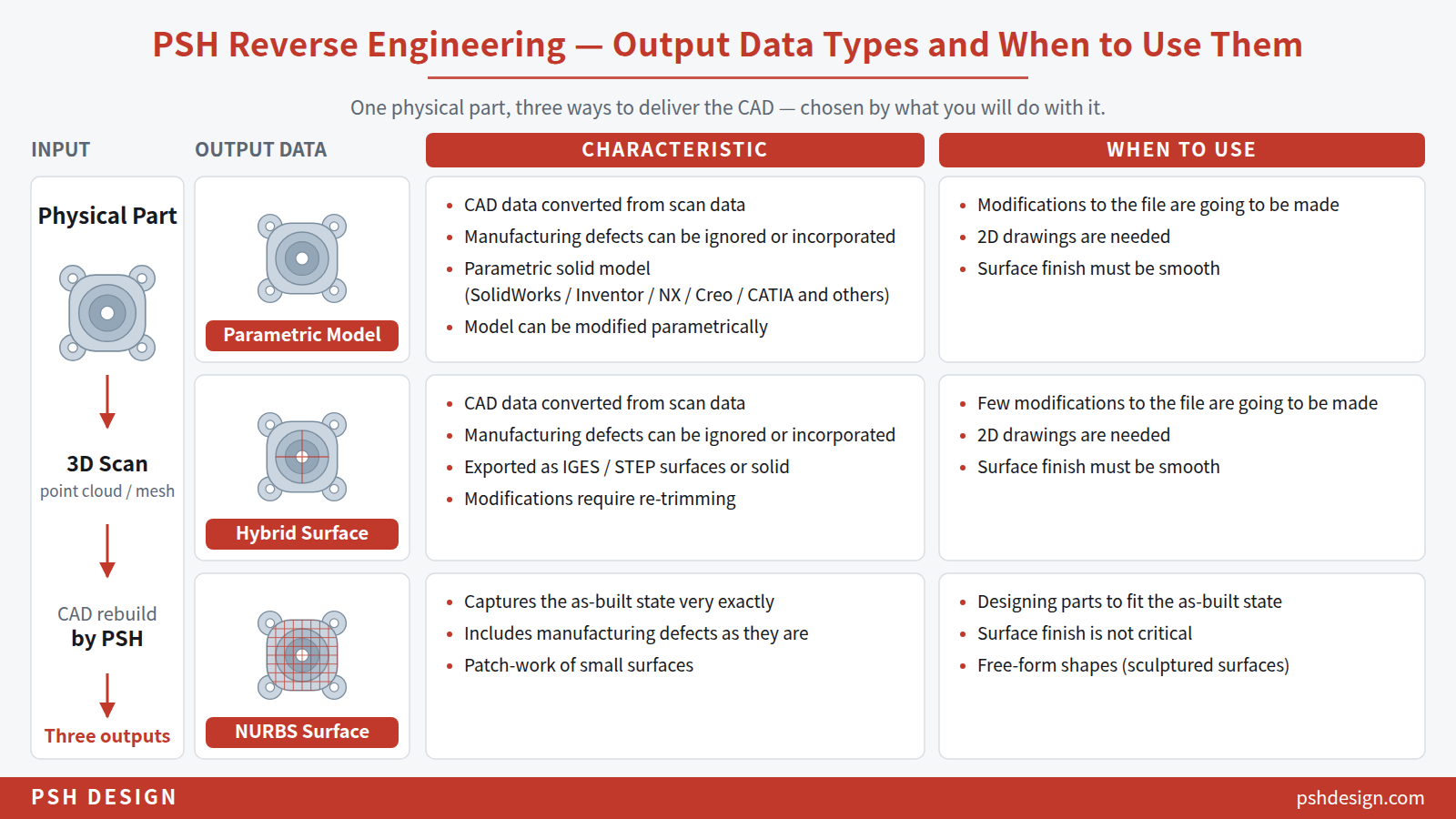
Professional Process: PSH Design employs cutting-edge 3D scanning technologies to capture point cloud or mesh data from physical samples. Specialized software then converts this data into parametric CAD models or NURBS surface models per customer requirements.
-
Wide Format Output: PSH Design can produce nearly all standard native CAD file formats on the market such as SolidWorks, Autodesk Inventor, PTC Creo, Catia, NX, including hybrid or surface models, catering to manufacturing and aesthetic design needs.
-
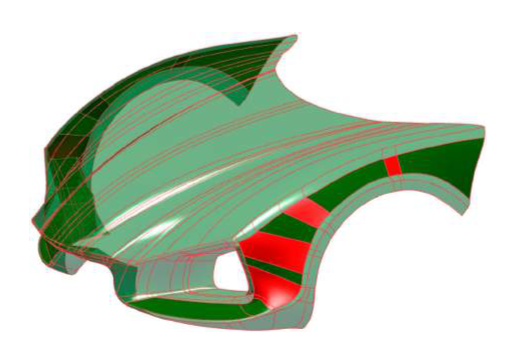
Manufacturing and Aesthetic Optimization: By integrating high-quality Class-A surfacing with reverse engineering, PSH Design ensures the negative CAD files are technically accurate and visually refined for industries like automotive, motorcycles, yachts, and premium home appliances.
-
3D CMM Measurement and Inspection Support: PSH Design provides precise measurement services and generates scan-to-CAD inspection reports to guarantee product compliance.
-
Advanced CATIA Integration: The company utilizes CATIA’s advanced functionality for rapid prototyping, visualization, and managing product data throughout the design process, supporting efficient development and high-quality outcomes.
Free Consultation and Testing
Clients can submit project requests for free consultation, quotes, and initial test services before formal project commencement. This allows you to evaluate PSH Design’s capabilities and quality before committing to a full project.
Conclusion
Parasolid remains the most widely adopted kernel in the market, leading in software integrations and data exchange standards. Its robust infrastructure makes it the industry standard for organizations requiring broad compatibility.
ACIS offers flexibility and numerous variants, serving a broad range of industries and companies developing custom CAD solutions. Its customizable architecture supports diverse applications across multiple sectors.
CGM serves as the high-tech core for large industrial corporations requiring tailored CAD solutions and complex workflows, especially in aerospace, automotive, and heavy equipment sectors. Its advanced capabilities make it ideal for mission-critical applications.
File Exchange Best Practices: File exchanges of native CAD files between different kernels need careful management to avoid data loss, favoring native or kernel-specific formats when possible. Neutral formats like STEP should be handled with software capable of import repair.
Reverse Engineering Excellence: For generating native negative CAD files, PSH Design uses a rigorous reverse engineering process combined with modern scanning and software, delivering precision and aesthetics aligned with client manufacturing requirements.
CATIA engineering design, supported by the 3DEXPERIENCE platform and its powerful capabilities, enables companies to achieve high-quality results and innovation across various industries, including architectural design. Whether you’re working with automotive, aerospace, medical devices, or premium consumer products, the combination of advanced CAD kernel technology and professional reverse engineering services provides the foundation for success.
PSH Design
Pioneering CAD Design Solutions for Automotive, Aerospace, and Medical Device Industries
Learn More:www.pshdesign.com
Request a Free Consultation:https://pshdesign.com/rfq-free-test-project/
Further references:
3D Reverse Engineering & AI Design: The Future Foundation of Medical Device Innovation
CAS Design and Class A Modeling: The Complete Guide from Concept to Perfection
3D Printed Medical Implants & Instruments: Design to Clinical Trial Excellence in Vietnam
Scaling Inspection Services with a Comprehensive Reverse Engineering Partner
Elegant Simplicity: The Class A Surfacing Precision Behind Modernist Design Language
Reverse engineering at PSH Design
Written for you if you run a metrology, CMM or 3D-scanning business — or an engineering team — and need scan or CMM data rebuilt as parametric CAD, delivered native in the system your customer works in. Not for you if you need a quick mesh for 3D printing, or modelling with no engineering intent behind it. We do not take that work, and saying so saves both sides time.
Read in this order:
- You Bought the Scanner. Who Builds the CAD? — what usable CAD means to the people downstream, and the two rebuild methods.
- What CAD In-House Costs, What a Day Costs, and What Actually Grows a Lab — software, training, lead time, and the number most quotes leave out.
- Scaling Inspection Services with a Reverse Engineering Partner — how an inspection business adds CAD capacity through a partner rather than a department.
- Reverse Engineering Services — formats, tolerances, lead times and terms.
Then judge the work, not the words: send one part — a scan, a CMM report or a drawing — and we build it at our cost →
PSH Design
17+ years of CAS, Class A Surfacing, CAD and Reverse Engineering for Automotive, Aerospace, Medical and Industrial, to OEM standard.
Concept Design & CAS · Class A Surfacing · CAD Engineering · Reverse Engineering
Work of this kind is easier to judge than to describe.