3D Reverse Engineering & AI Design: The Future Foundation of Medical Device Innovation
3D Reverse Engineering & AI Design: The Future Foundation of Medical Device Innovation
Why Legacy Design Data is Your Most Valuable Asset
In the medical device industry, design legacy represents both an opportunity and a challenge. Thousands of products have been manufactured and distributed over decades, yet their original drawings or CAD models are often lost, obsolete, or incompatible with modern software platforms.
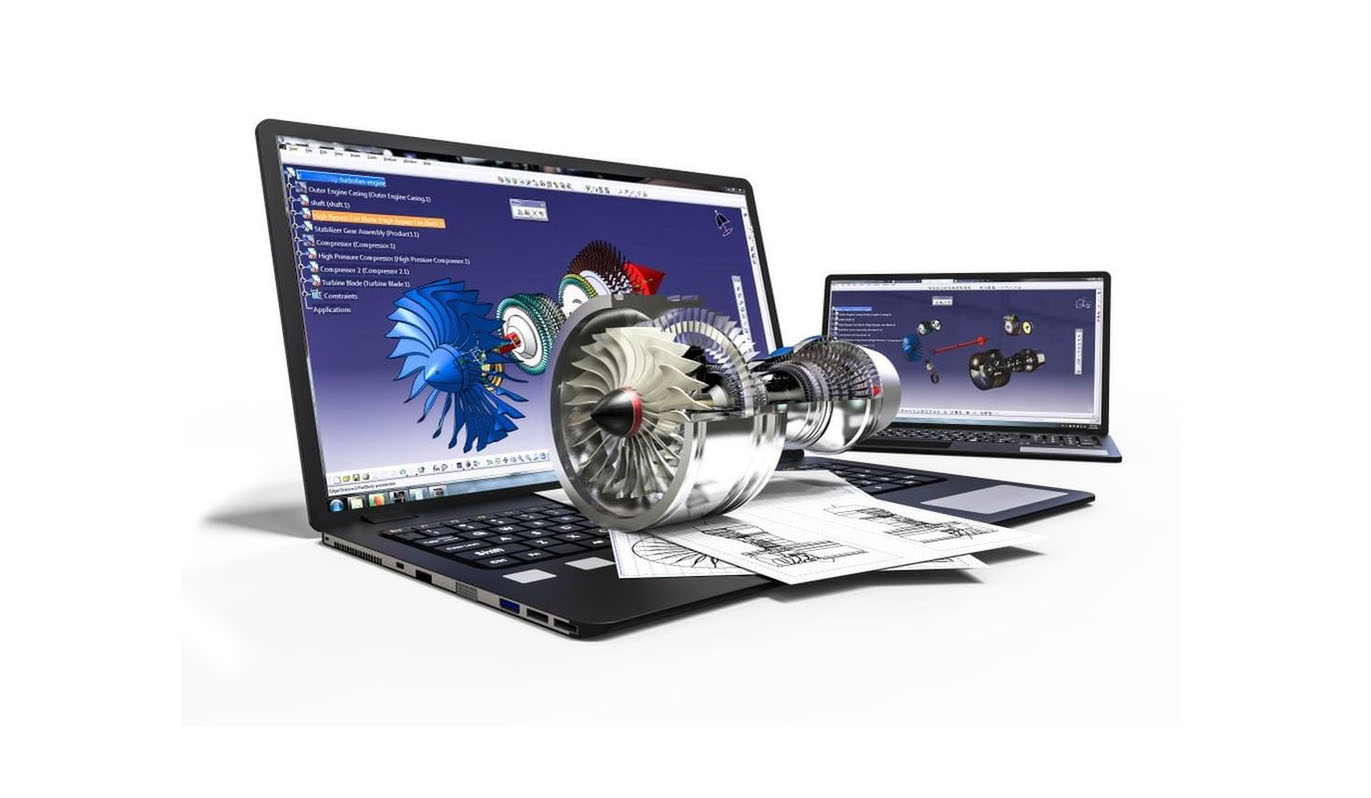
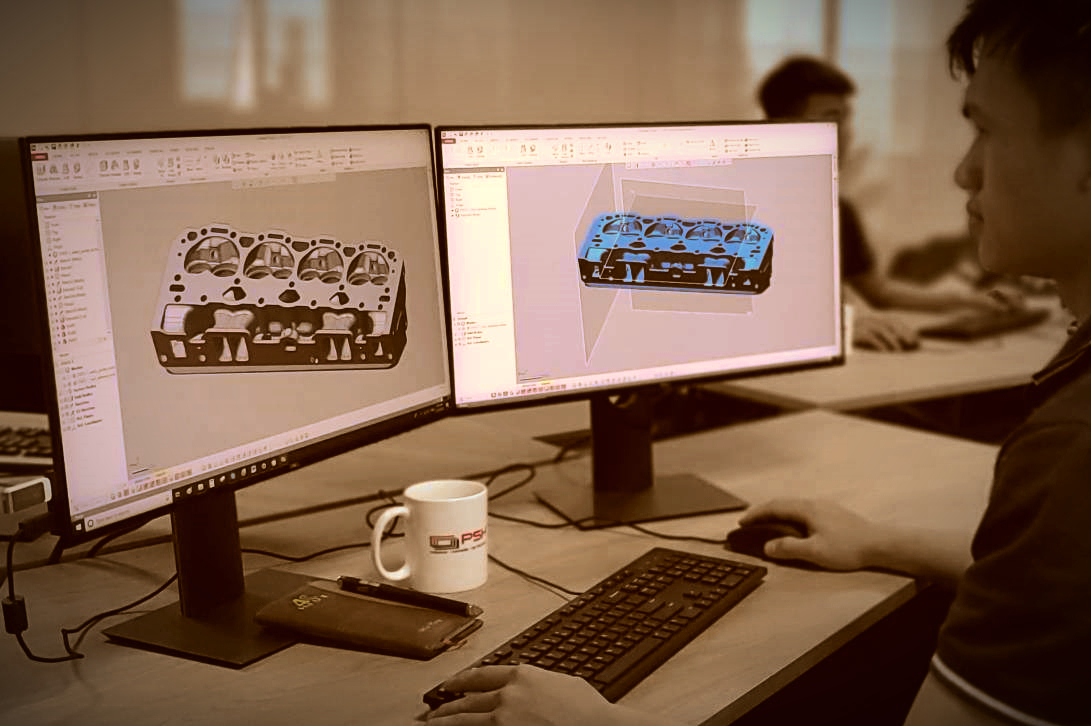
3D reverse engineering services address this critical challenge by digitizing existing products into accurate CAD models. This process enables medical device companies to:
- Reconstruct existing designs with precision, eliminating the need to reinvent the wheel and reducing development cycles from years to months.
- Accelerate time-to-market for next-generation products by leveraging digitized 3D models as a foundation for iterative improvements, optimization, and product line extensions.
- Ensure backward compatibility with existing components and systems already deployed in clinical settings, minimizing regulatory risk and market disruption.
This traditional application of reverse engineering has proven invaluable for companies managing extensive product portfolios. Yet it merely scratches the surface of what’s possible when reverse engineering converges with artificial intelligence and additive manufacturing technologies.

The Invisible Gap: Everyone Talks About AI, But Who Has the Data?
The true potential of 3D reverse engineering in medical device development extends far beyond digitizing legacy products. It fundamentally serves as the foundational data infrastructure for AI-driven design systems – a critical component that most organizations overlook entirely.
Consider the current landscape facing medical device companies across the US, Germany, and UK:
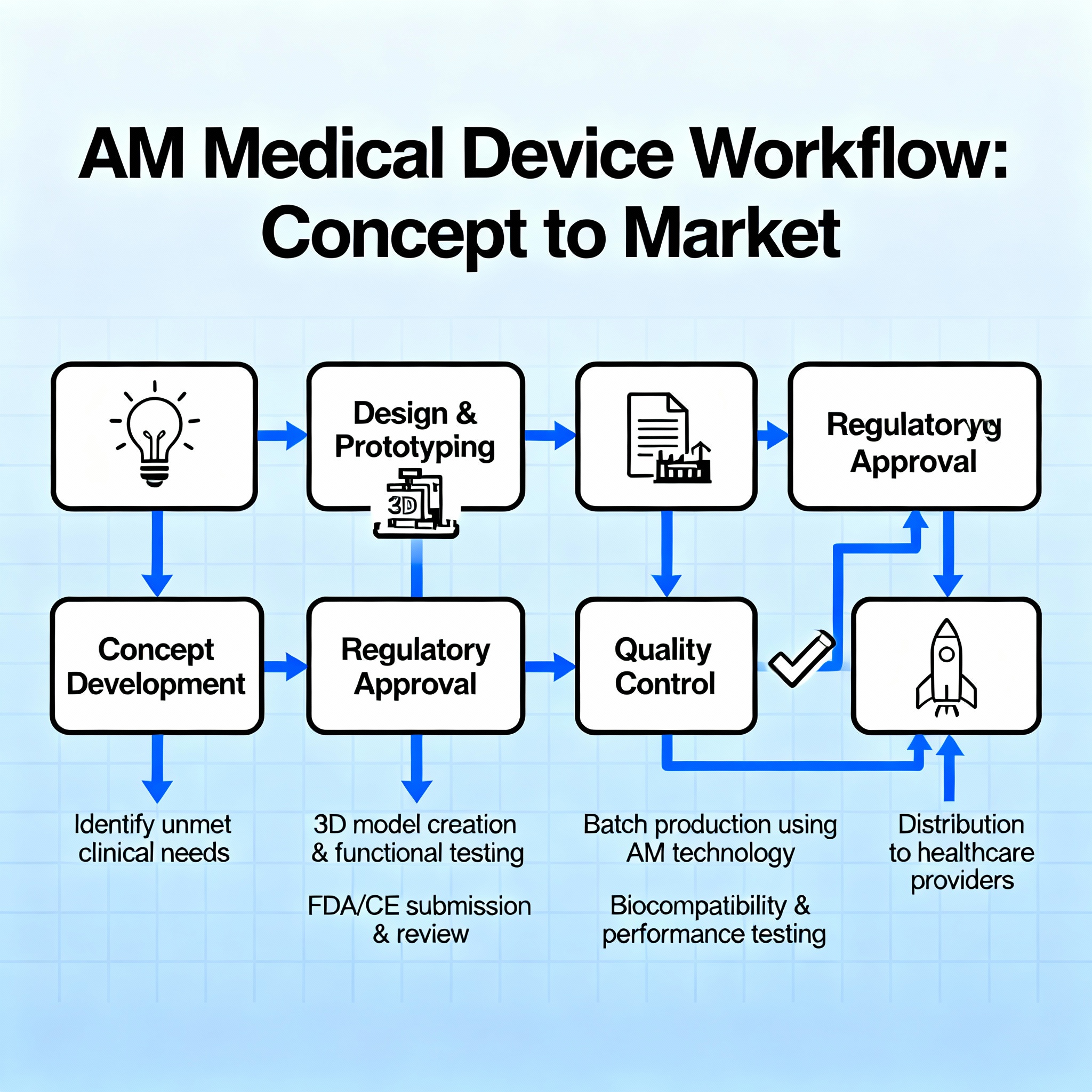
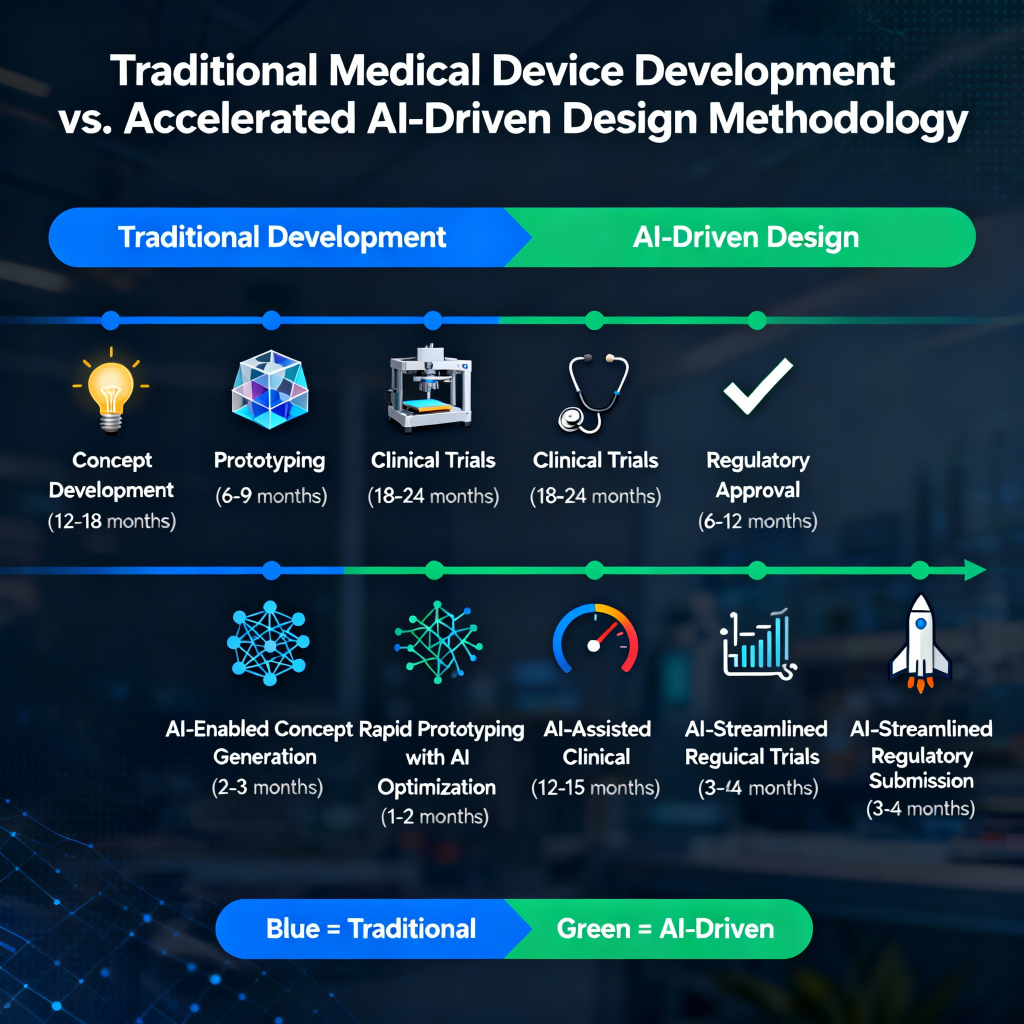
The Time-to-Market Imperative: Bringing a Class II medical device to market averages 3-7 years; complex implants and Class III devices can exceed 12 years. For companies operating in competitive markets, this timeline represents significant opportunity cost and the risk of market obsolescence.
The Cost Barrier: Average development expenses for a Class II device reach $30 million USD, with approximately $24 million (80%) allocated to FDA compliance and regulatory activities. Class III devices can demand $94 million or more. These figures exclude the R&D costs for failed projects and design iterations.
Regulatory Complexity: FDA, CE, and international regulatory frameworks are continuously evolving. Compliance with ISO 13485, EU MDR, cybersecurity requirements for AI-enabled devices, and emerging standards creates layers of complexity that extend timelines and inflate budgets.
Data Security and Privacy Constraints: HIPAA and GDPR regulations impose stringent requirements on handling patient health information. Medical device manufacturers cannot freely aggregate and leverage patient imaging data for design optimization without sophisticated data governance frameworks.
Yet here’s the paradox everyone misses: Organizations across the industry are investing heavily in artificial intelligence and machine learning capabilities. However, AI models cannot produce meaningful results without high-quality training data.
Generative AI systems for medical device design optimization require access to:
- Anatomically diverse 3D patient data representing real-world variations
- Clinically validated device geometries and performance characteristics
- Rigorous documentation of design decisions and outcomes
- Curated datasets meeting strict privacy and regulatory standards
The companies that will dominate medical device innovation over the next decade are those that solve the data problem first. Standard AI implementations fail because they’re trained on insufficient, unrepresentative, or improperly curated datasets. 3D reverse engineering, properly executed with robust data governance, is how you build that foundation.

The Strategic Shift: From Product Digitization to AI-Driven Design Ecosystem
This distinction represents a fundamental strategic inflection point for the industry. Traditional reverse engineering focused on converting physical products into digital formats. The emerging paradigm leverages digitized data as training material for intelligent systems that can:
- Generate thousands of design variations in minutes, automatically optimizing for compliance, manufacturability, and clinical performance
- Predict design performance across diverse anatomical scenarios without exhaustive physical prototyping
- Accelerate FDA/CE design verification processes by providing comprehensive documentation of design intent and performance validation across the patient population spectrum
Companies pioneering this transition are achieving remarkable results. Generative design applications combined with medical-grade 3D printing are producing implants that are 40% lighter and 20% more durable than traditionally manufactured alternatives. More importantly, they’re reducing design-to-manufacturing timelines from months to weeks.
But again – none of this is possible without abundant, accurate 3D training data curated specifically for medical applications.
Bridging the Data Gap: Proprietary Datasets and Medical Device Optimization
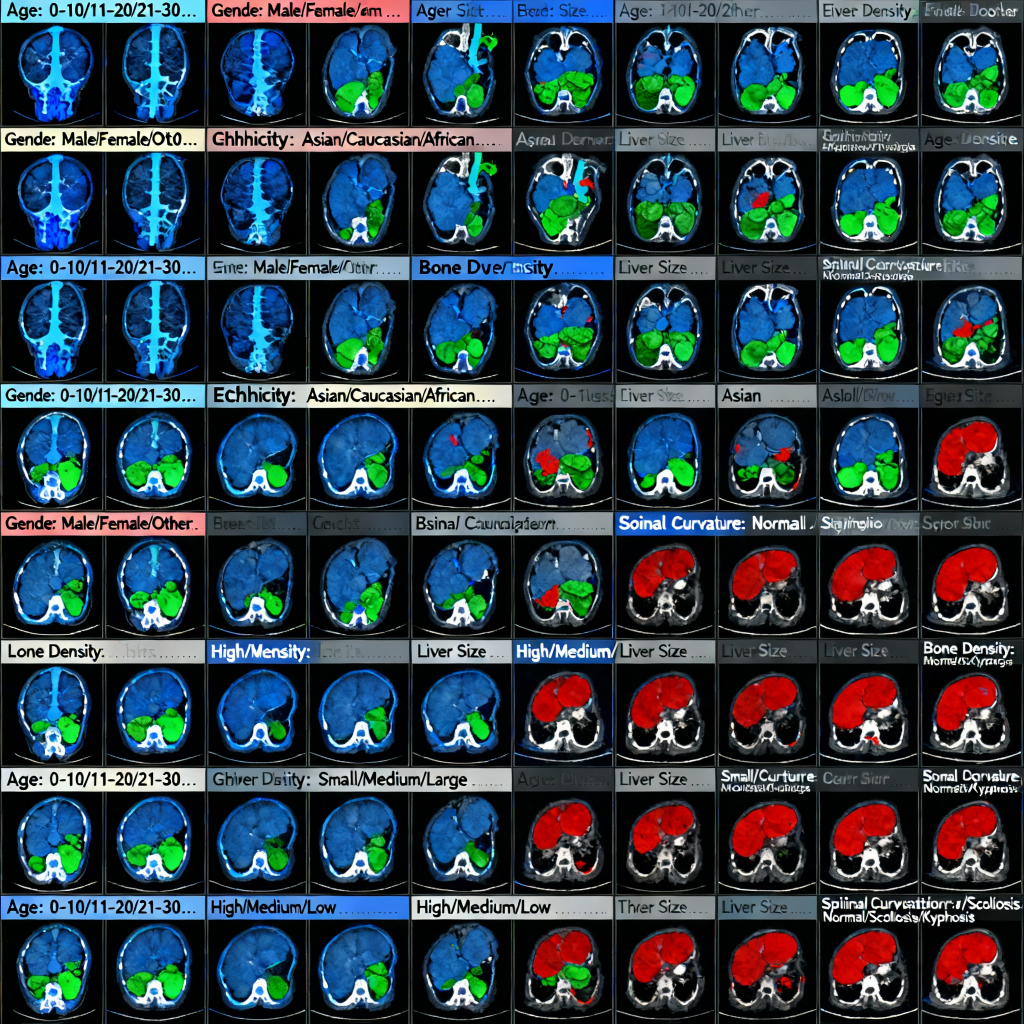
This is where the strategic value of organizations with existing medical imaging databases becomes apparent. Companies that have invested in accumulating and organizing tens of thousands of CT scans, MRI datasets, and three-dimensional anatomical measurements possess a competitive moat that’s nearly impossible for competitors to replicate.
Consider the implications:
Data Governance Advantage: Organizations managing 20,000+ CT scans from actual patients across diverse demographics can train AI models that understand real-world anatomical variation. These models don’t require each manufacturer to independently manage sensitive PHI (Protected Health Information), addressing the HIPAA/GDPR constraint that has historically paralyzed AI development in healthcare.
Clinical Relevance: Unlike generic AI datasets, patient-specific anatomical data enables the development of patient-specific medical device design systems – a capability directly aligned with precision medicine trends now reshaping healthcare delivery.
Regulatory Confidence: Design optimization conducted against diverse, representative patient cohorts provides compelling evidence of design robustness across the target population – exactly what FDA and CE reviewers expect to see in comprehensive Design Verification and Validation documentation.
Development Velocity: Organizations with immediate access to curated anatomical databases can compress design iteration cycles dramatically. What would normally require 6-12 months of clinical validation can often be completed in weeks through simulation against validated datasets.
The critical question facing medical device companies is not “Should we implement AI?” but rather “Do we have access to the validated 3D data infrastructure required to make AI meaningful?”

The Convergence: Reverse Engineering, Additive Manufacturing, and Generative Design
When properly integrated, these three disciplines create a virtuous cycle:
- Reverse Engineering produces high-fidelity data
Scanning existing medical devices, anatomical specimens, or clinical imaging generates precise 3D geometry in digital form. When conducted using medical-grade scanning protocols and rigorous quality verification processes, this data becomes the training foundation for all subsequent systems.
- Additive Manufacturing enables design freedom
3D printing technologies – whether metal (titanium implants), biocompatible polymers, or resins – eliminate many manufacturing constraints that have historically dominated medical device design. Lattice structures, patient-specific geometries, and complex internal architecture become not just possible but economically feasible.
- Generative Design optimizes for multiple objectives
With abundant CAD data and manufacturing freedom, generative algorithms can rapidly explore design spaces constrained by:
- Anatomical compatibility (patient-specific fit)
- Biomechanical performance requirements
- Manufacturability specifications for additive processes
- Material properties and biocompatibility standards
- Manufacturing cost targets
This convergence represents the future of medical device innovation. Organizations that orchestrate these capabilities will significantly outpace competitors still relying on traditional design-build-test cycles.
Translating Strategy into Competitive Advantage
For medical device companies, several strategic imperatives emerge from this analysis:
Assess Your Data Infrastructure: Evaluate whether your organization has or can acquire access to curated, diverse 3D anatomical datasets sufficient to train meaningful AI models. This may be a limiting factor in your AI strategy.
Evaluate Reverse Engineering Capabilities: Modern medical device development requires not just traditional CAD engineers but specialists in converting complex imaging data into validated 3D models. The quality and rigor of this data translation directly impacts everything downstream – regulatory confidence, AI model accuracy, and manufacturing precision.
Plan for Design Optimization Workflows: Establish processes integrating generative design, additive manufacturing, and design for 3D printing methodologies. These aren’t emerging capabilities; they’re already operational in leading organizations and shifting competitive positions.
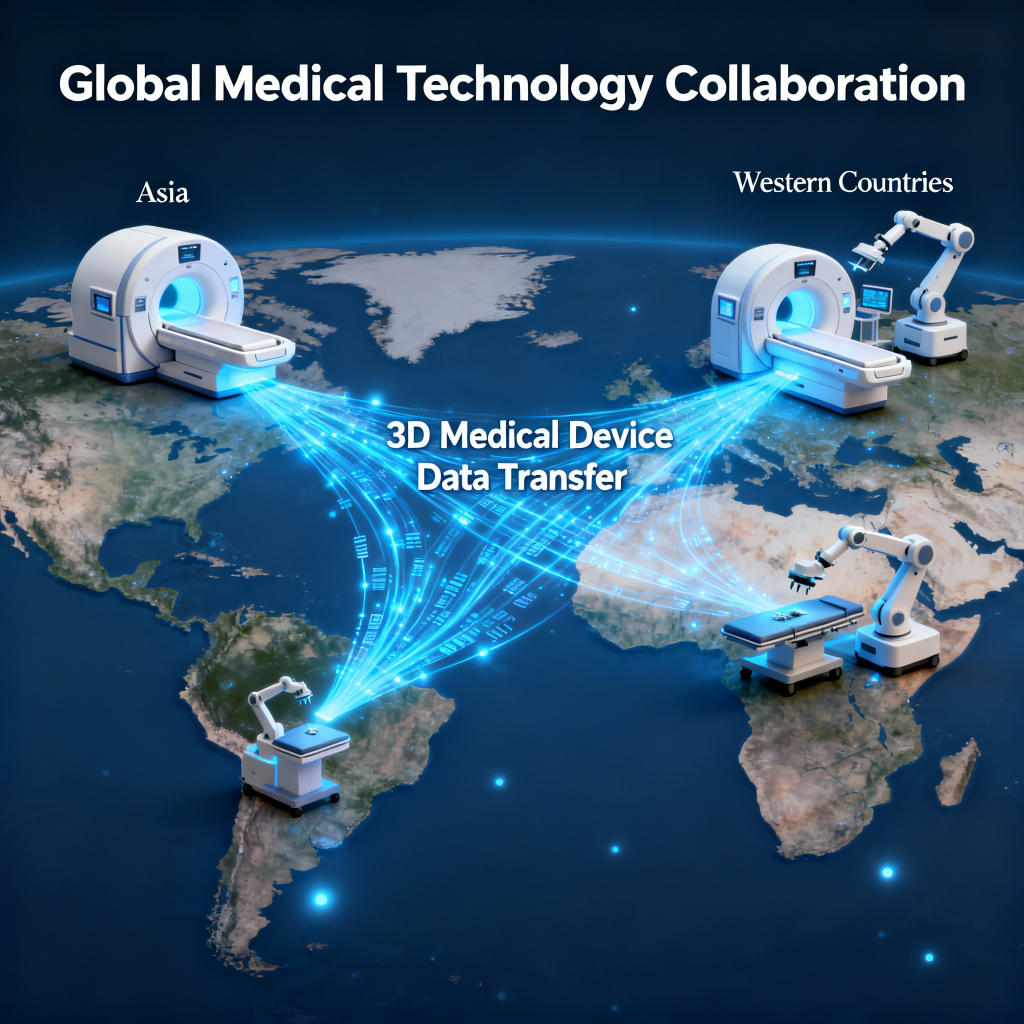
Build Cross-Border Technical Partnerships: The talent required for specialized reverse engineering, medical-grade 3D scanning, generative design optimization, and AI curation increasingly exists in geographically distributed markets. Organizations managing distributed technical teams effectively will access capabilities at scale and cost-efficiency that purely domestic development cannot match.
The Cross-Border Reality: Asia’s Emerging Role in Global Medical Device Innovation
The medical device industry faces an uncomfortable truth: international cross-border collaboration is no longer optional – it’s strategically essential.
Consider the market dynamics:
Asia-Pacific Market Growth: The Southeast Asian medical device market alone is projected to grow at 7.3% CAGR through 2030, with over $1.8 billion in MedTech venture investment over the past three years. This represents massive clinical volume and emerging purchasing power that Western manufacturers cannot ignore.
Talent Distribution: Specialized technical capabilities in 3D reverse engineering, generative design, and medical device CAD engineering exist abundantly in Asian markets – often at cost structures that justify geographic distribution, while maintaining quality standards meeting international compliance requirements.
Data Geography: Some of the world’s largest patient populations and most advanced healthcare imaging infrastructure now reside in Asia. This translates to unprecedented access to diverse anatomical data – exactly the training material required for AI systems.
Strategic Vision for Western MedTech Leaders: Organizations that establish technical footholds in Asia – not for cost arbitrage alone, but as genuine innovation hubs – will build capabilities their purely Western-based competitors cannot replicate. The combination of:
- Access to large, diverse patient data
- Deep technical talent pools
- Proximity to rapidly growing clinical markets
- Cost structures enabling rapid experimentation
…creates a strategic platform for global medical device innovation that no single-geography company can match.
Companies treating Asia as merely a manufacturing location are missing the strategic opportunity. The future belongs to organizations that treat Asia as an innovation hub – leveraging local talent, local data, and local market understanding to drive global competitiveness.
Strategic Considerations for Implementation
Governance and Privacy: Establish clear frameworks ensuring patient data handling complies with local (GDPR, HIPAA) and international standards. This enables leveraging diverse datasets without exposing organizations to regulatory risk.
Quality Assurance: Medical device applications demand rigorous validation of 3D data accuracy, CAD model fidelity, and AI model performance. Implement independent verification processes ensuring design outputs meet clinical and regulatory requirements.
Talent and Partnership Strategy: Identify specialized partners with demonstrated expertise in medical-grade reverse engineering, compliance-aware AI implementation, and design for additive manufacturing. This is increasingly a collaboration challenge rather than a purely technical one.
Regulatory Readiness: Engage regulatory consultants early in design evolution. FDA and CE expectations around AI-generated designs, reverse-engineered anatomical data, and 3D-printed manufacturing processes are still evolving – proactive engagement shapes compliance strategies.
The Path Forward
The medical device companies achieving market leadership over the next 5-10 years will be those that:
- Recognize that AI effectiveness depends entirely on data quality – investing in robust reverse engineering, anatomical data curation, and governance frameworks
- Embrace the convergence of reverse engineering, additive manufacturing, and generative design as integrated innovation capabilities
- Build genuine cross-border technical collaborations accessing global talent, diverse patient data, and market insights
- Implement rigorous design verification processes leveraging AI and simulation to accelerate FDA/CE pathways while enhancing confidence in design robustness
The competitive advantage will not accrue to companies that adopt these technologies most quickly, but to those that build the most robust and representative data infrastructures and organize their technical organizations to extract maximum value from them.
Organizations with specialized expertise in medical-grade 3D data acquisition, CAD conversion, and AI-ready data curation represent critical strategic resources for companies pursuing this transformation. Identifying and partnering with organizations possessing this combination of capabilities – particularly those with access to diverse, curated anatomical datasets and experience navigating medical device regulatory requirements – has become essential strategic work.
About PSH Design
For 17+ years, PSH Design has worked with leading medical device manufacturers in the US, Europe, and Asia-Pacific on advanced reverse engineering, 3D CAD conversion, and design optimization for additive manufacturing. PSH maintains offices in Vietnam, Germany, Japan, and the US, serving as a strategic technical partner for organizations implementing the convergence strategies outlined in this analysis.
For organizations exploring cross-border partnerships, technical capability assessment, or strategic collaboration in medical device design innovation, PSH Design can be contacted at info@pshdesign.com or https://pshdesign.com/rfq-free-test-project/
📚 FURTHER READING – KEY RESOURCES:
1️⃣ Nature (2024) – Reverse Engineering in Medical Devices
https://www.nature.com/articles/s41598-024-74176-z
2️⃣ FDA (2024-2025) – AI/ML Medical Device Regulatory Framework
https://www.complizen.ai/post/fda-ai-medical-device-regulation-2025
3️⃣ IMDRF (2024) – Good Machine Learning Practice Standards
https://www.imdrf.org/sites/default/files/2024-06/Good%20machine%20learning%20practice%20for%20medical%20device%20development
4️⃣ Journal of Additive Manufacturing (2023) – 3D Titanium Implants Clinical Validation
https://accscience.com/journal/IJB/9/6/10.36922/ijb.0125
5️⃣ DKSH (2023) – Asia-Pacific Medical Device Market Analysis
https://www.dksh.com/de-en/home/insights/transforming-healthcare-in-asia-pacific-the-impact-of-medical-devices
6️⃣ Pharma DocX & Ideagen (2024-2025) – ISO 13485 Design Control Standards
https://pharmadocx.com/medical-device-design-and-development-according-to-iso-134852016/
Reverse engineering at PSH Design
Written for you if you run a metrology, CMM or 3D-scanning business — or an engineering team — and need scan or CMM data rebuilt as parametric CAD, delivered native in the system your customer works in. Not for you if you need a quick mesh for 3D printing, or modelling with no engineering intent behind it. We do not take that work, and saying so saves both sides time.
Read in this order:
- You Bought the Scanner. Who Builds the CAD? — what usable CAD means to the people downstream, and the two rebuild methods.
- What CAD In-House Costs, What a Day Costs, and What Actually Grows a Lab — software, training, lead time, and the number most quotes leave out.
- Scaling Inspection Services with a Reverse Engineering Partner — how an inspection business adds CAD capacity through a partner rather than a department.
- Reverse Engineering Services — formats, tolerances, lead times and terms.
Then judge the work, not the words: send one part — a scan, a CMM report or a drawing — and we build it at our cost →
PSH Design
17+ years of CAS, Class A Surfacing, CAD and Reverse Engineering for Automotive, Aerospace, Medical and Industrial, to OEM standard.
Concept Design & CAS · Class A Surfacing · CAD Engineering · Reverse Engineering
Work of this kind is easier to judge than to describe.