Concept Design & CAS
Concept Design & CAS
CAS is where a design stops being a picture and becomes geometry. We have done that step since 2009.
First surface at our cost · Pay only when you are satisfied · NET 30 · Every model warranted for life
Since 2009
CAS and surface work
~2 weeks
Brief to a resolved 3D direction
17+ years
Luxury automotive interior surfaces
One Model, Four Stages

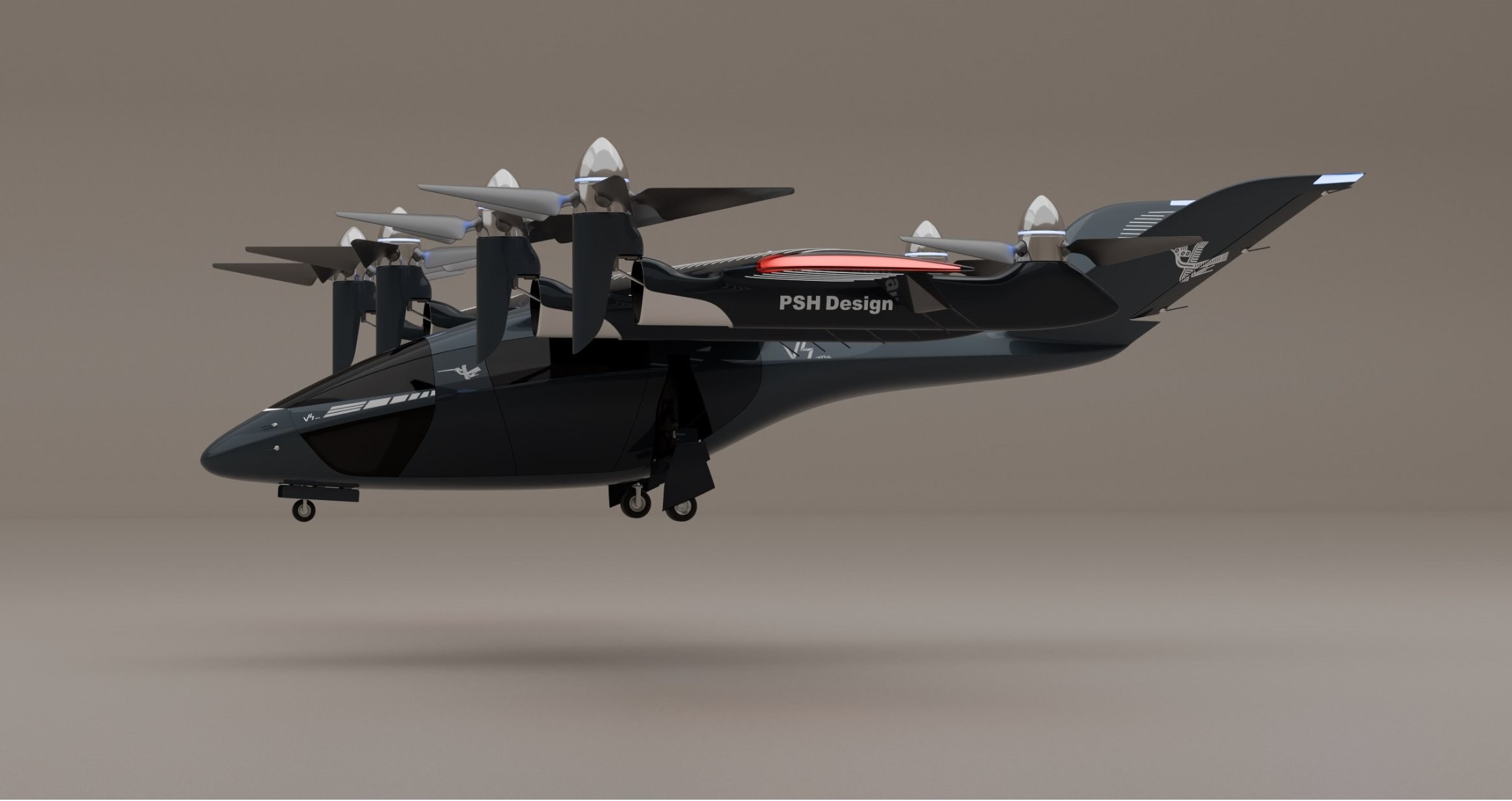
Our own eVTOL concept. No client, no brief — every line on it is a decision someone here had to defend.
Grey, unmaterialled. Nothing to hide behind.
How the mesh is built decides what the surface can do. The one thing that cannot be fixed downstream.
Where one surface ends and the next begins — the decision behind every highlight.
A form the studio can judge and engineering can start from.
What CAS Design Actually Is
CAS — Computer Aided Styling — is the stage between a sketch and an engineering model. It turns intent into surfaces that can be judged, measured and built on.
Three terms get used interchangeably and should not be. CAS modeling resolves the form. Class A surfacing perfects a form already approved, to G2 or G3 continuity, for visible tooling. CAD engineering builds the parts underneath.
Done well, CAS gives the studio a form it can evaluate and engineering data it can inherit. Done badly, the Class A team starts again.
We work in Sub-D, in Blender — flexible enough to keep exploring while a design is still moving, structured enough to convert to NURBS afterwards. From a clear brief to a resolved direction is about two weeks. Most of our input is rough: a hand sketch, reference photographs, a scan, a drawing with three dimensions that cannot move.
Beside the Designer, Not Instead of One
A designer inside a carmaker carries two jobs at once: protect a design language built over decades, and still arrive with something that reads as next.
What that produces is volume — far more ideas than ever get modelled. Directions are sketched, shown, argued over and set aside, most of them not because they were wrong but because there was no time to see them in three dimensions while the decision was still open.
This is not a substitution, and we would not pitch it as one. A studio designer holds the brand’s intent, and nobody outside the building can hold that for them. An outside CAS modeller adds throughput and surface depth at the moment there is more idea than time — which is why the two roles sit together rather than compete.
Vehicles That Do Not Exist Yet
Some work starts earlier — before there is a design language to protect, because the vehicle is the first of its kind.
Electric aircraft, air taxis, autonomous vehicles, high-speed rail interiors, seaplanes, large yachts. Funded teams, no in-house styling department, and a surface standard their investors will judge them on immediately.
Here we take the designer’s seat as well as the modeller’s: we arrive with our own proposals rather than waiting for a brief, then work them with you until the form is yours rather than ours.
The same concept, including the way it leaves the ground.
One thing makes either arrangement work: one person on your side who can look at a direction and answer. A chief designer, a technical manager — whoever holds the intent. Moving quickly only pays off when the answer comes from one place rather than a circulated file.
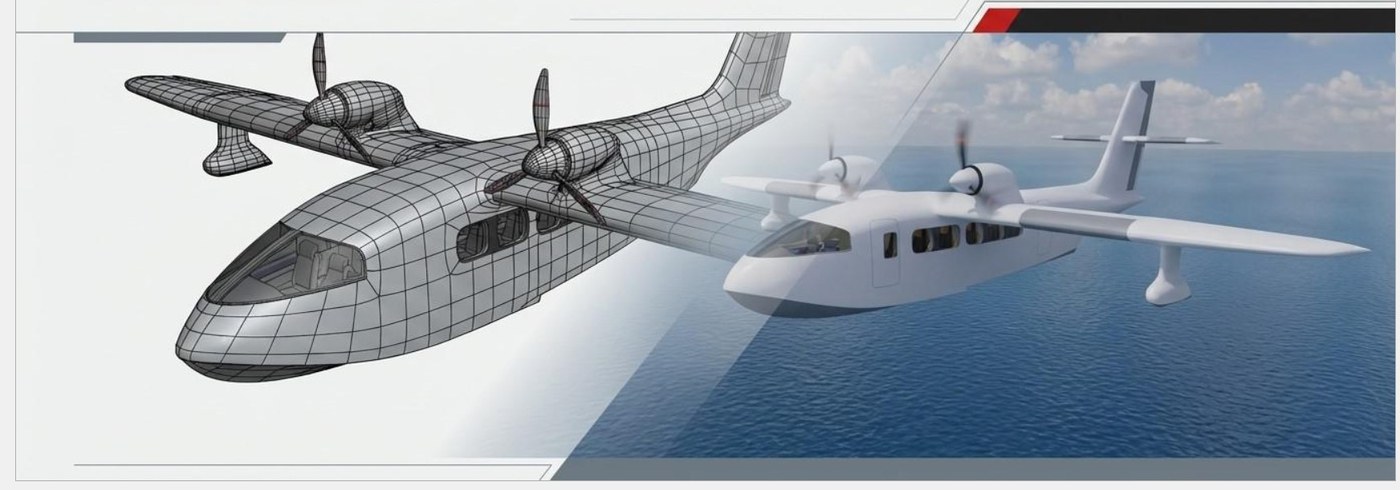
An electric seaplane concept. The mesh on the left is what makes the surface on the right possible.
Cabin and Interior: What Carries Over
A premium car interior is the hardest interior in production. 17+ years of it is the specific thing that makes this work possible.
It is touched constantly, judged in daylight and at night, packed into a space with nothing to spare, and held to a standard the customer applies without knowing they are applying it. Reach and sightlines, how a surface meets a hand, how ambient light finds a transition that is nearly right, how to package a seat that still looks light — all of it transfers to a cabin.
What does not transfer is the regulation. Certification for aircraft and rail interiors is yours or your partner’s to own; we design the form, the surfaces and the packaging inside the constraints you give us.
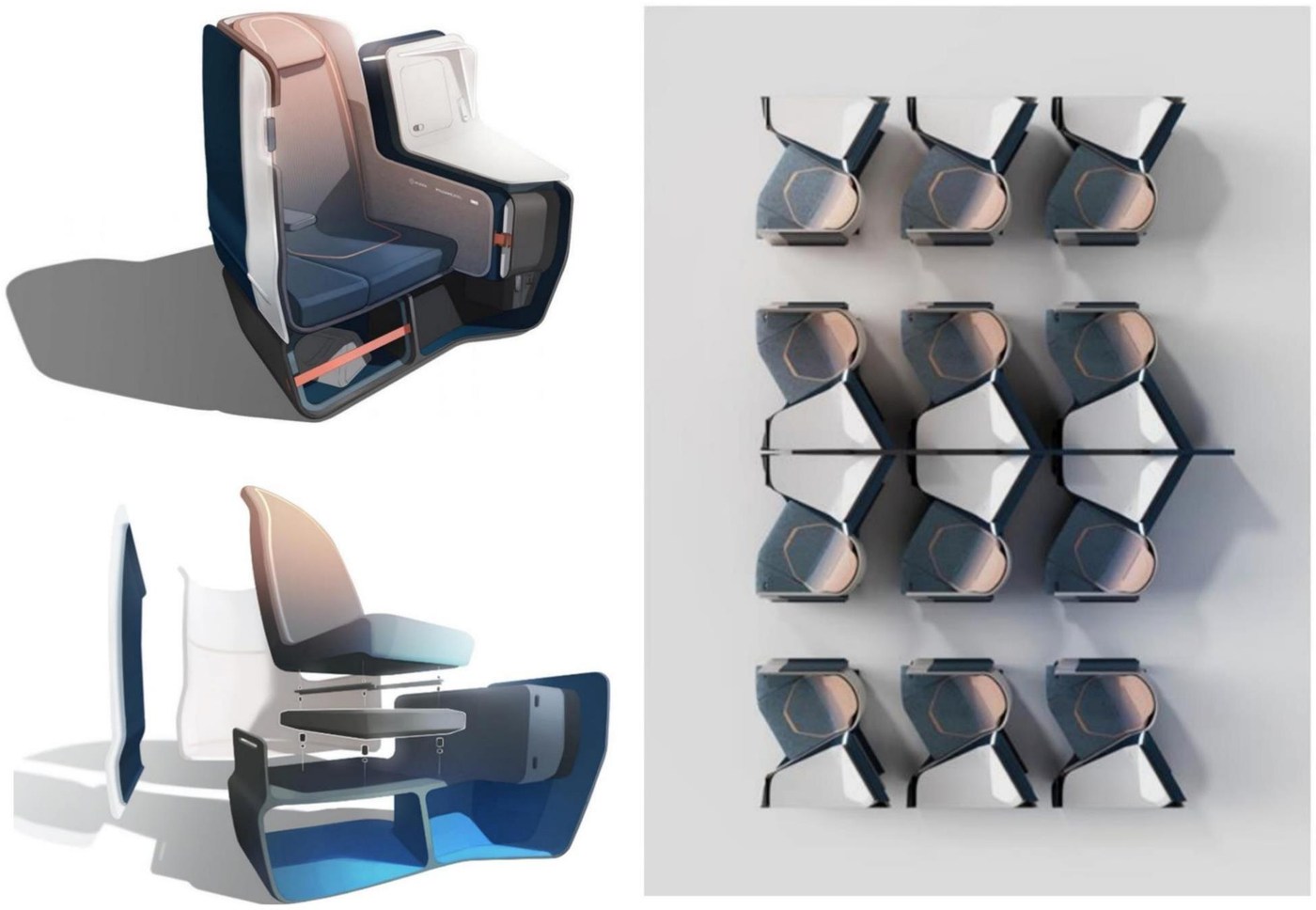
One seat, taken apart and packed. How it is built and how it repeats down a cabin are the same problem — solved once, or solved twice.
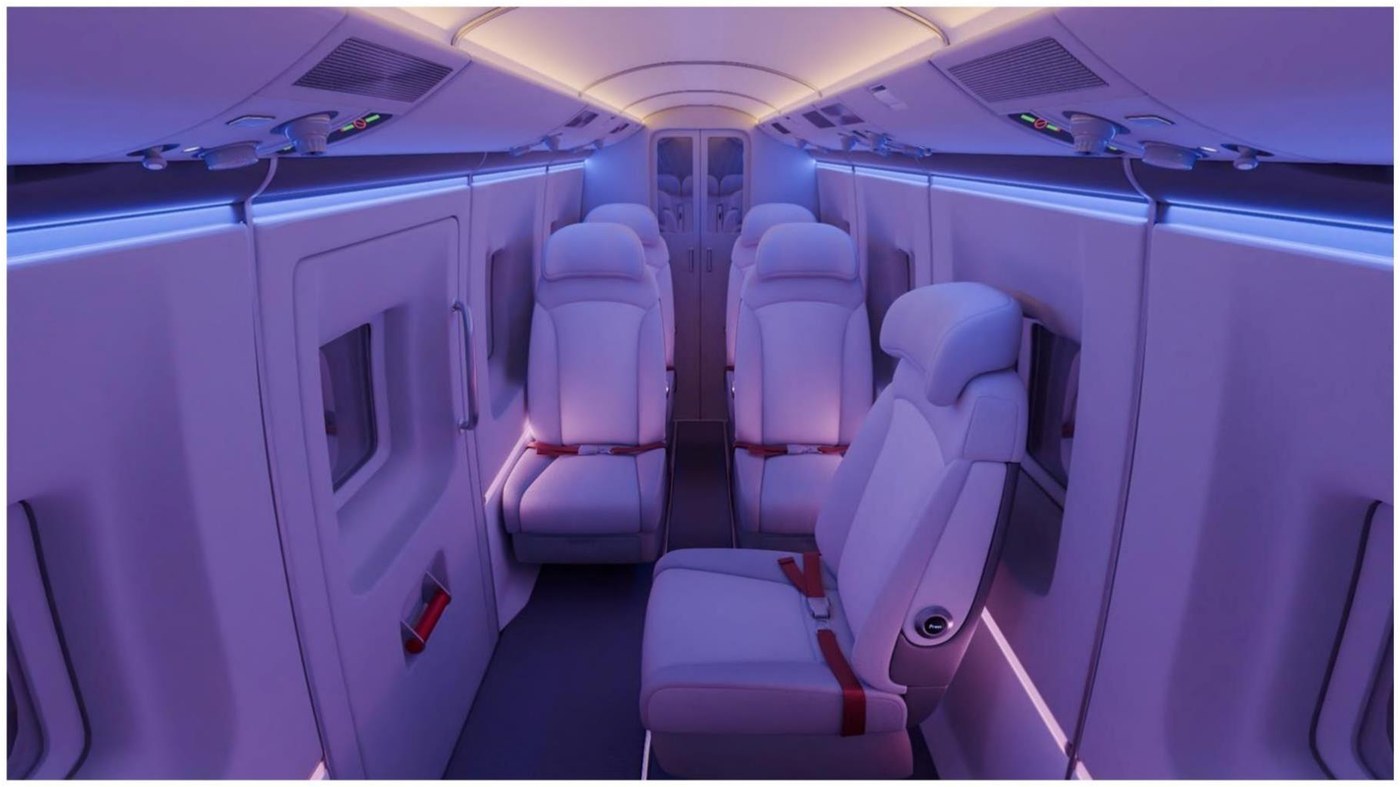
Ambient light is the most unforgiving test a surface faces.
Where AI Helps, and Where It Does Not
We use AI in the concept loop to compress how quickly a form can be seen in different materials, colours and lighting — on top of geometry that already exists.
It does not design and it does not model. An AI image contains no geometry: you cannot run a packaging check on it, hand it to engineering, or tell from it whether a surface is continuous.
Two limits worth stating. Chrome, polished metal and glass are still where AI rendering breaks down, so hero views get made properly. And confidential geometry does not go into public AI services.
CAS to Class A, Inside One Company
The expensive moment in a concept programme is not the design. It is the handover — when an approved form goes elsewhere to be rebuilt as production surfaces, and something in it quietly changes.
Here it does not change hands. The Sub-D model is built from day one with the conversion in mind: topology that survives becoming NURBS, patch boundaries placed where a Class A surfacer would want them. Where a project does not need Class A, the model goes straight to production CAD instead — described on our CAD engineering page, with the surfacing standard itself on Class A surfacing.
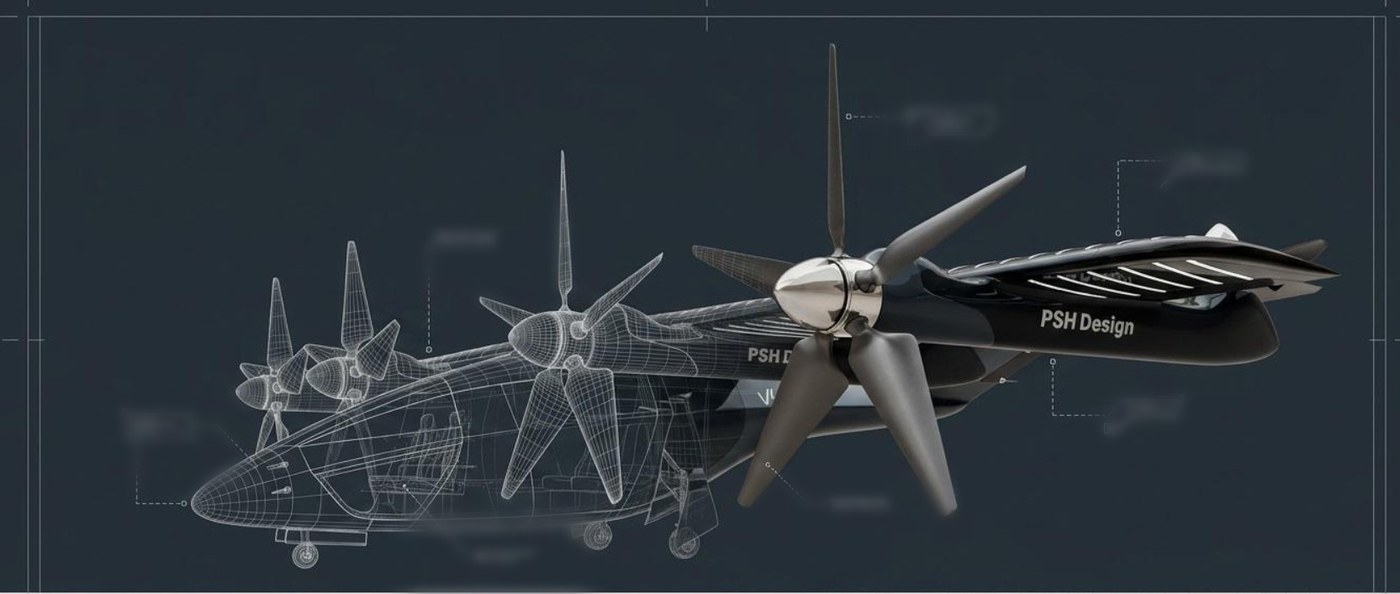
Control cage and finished surface on the same aircraft. One model, not two.
What You Get, and How It Runs
Sub-D data structured for conversion, plus STEP and IGES. Renders come with it — the geometry is the deliverable.
One sketch, one photograph, one scan. We model it at our cost, so you judge the result rather than the proposal.
Client work goes out under your name and is never published. Everything on this page is our own.
Data sent at the end of your day is worked on during your night. Mutual NDA, no public cloud storage, deletion on request.
Questions We Are Asked
What is the difference between CAS modeling and Class A surfacing?
CAS resolves the form, while the design is still being found. Class A perfects a form already approved, to G2 or G3 continuity, for visible tooling. Different skills, different stage. We do both, and a model that starts here is built so the second stage does not begin again.
What can you work from?
A hand sketch, reference photographs, a scan of an existing part, a drawing with fixed dimensions, or a written brief with nothing visual at all. Rough input is the normal case, not the difficult one.
How long does a concept direction take?
About two weeks from a clear brief to a resolved 3D direction both design and engineering can comment on. Open-ended briefs take longer, and we say so before starting rather than after.
Do you use AI to design?
No. We use it to see a form quickly in different materials and lighting, on top of geometry our people built. It produces no geometry of its own, so it cannot be handed to engineering or checked for continuity. The design decisions are made by designers.
Have you designed an aircraft or a rail interior before?
We have designed aircraft cabins, seats and an electric seaplane, and the eVTOL on this page is our own concept. What we bring to a new category is 17+ years of luxury automotive interior surfacing. Certification is yours or your partner’s to own, not ours.
Can the Sub-D model be used for Class A directly?
Not as final Class A data. But it is built to convert — topology and patch boundaries chosen with that conversion in mind — which removes the rebuild that normally sits between an approved concept and production surfaces.
Is the work on this page client work?
No. Everything here is our own concept work. Client projects go out under the client’s name and are never published, which is the arrangement our customers prefer and the reason this page names none of them.
Concept Design and CAS, in depth
 Hardware Startup Design: Why Product Surface Decides TrustRead the article →
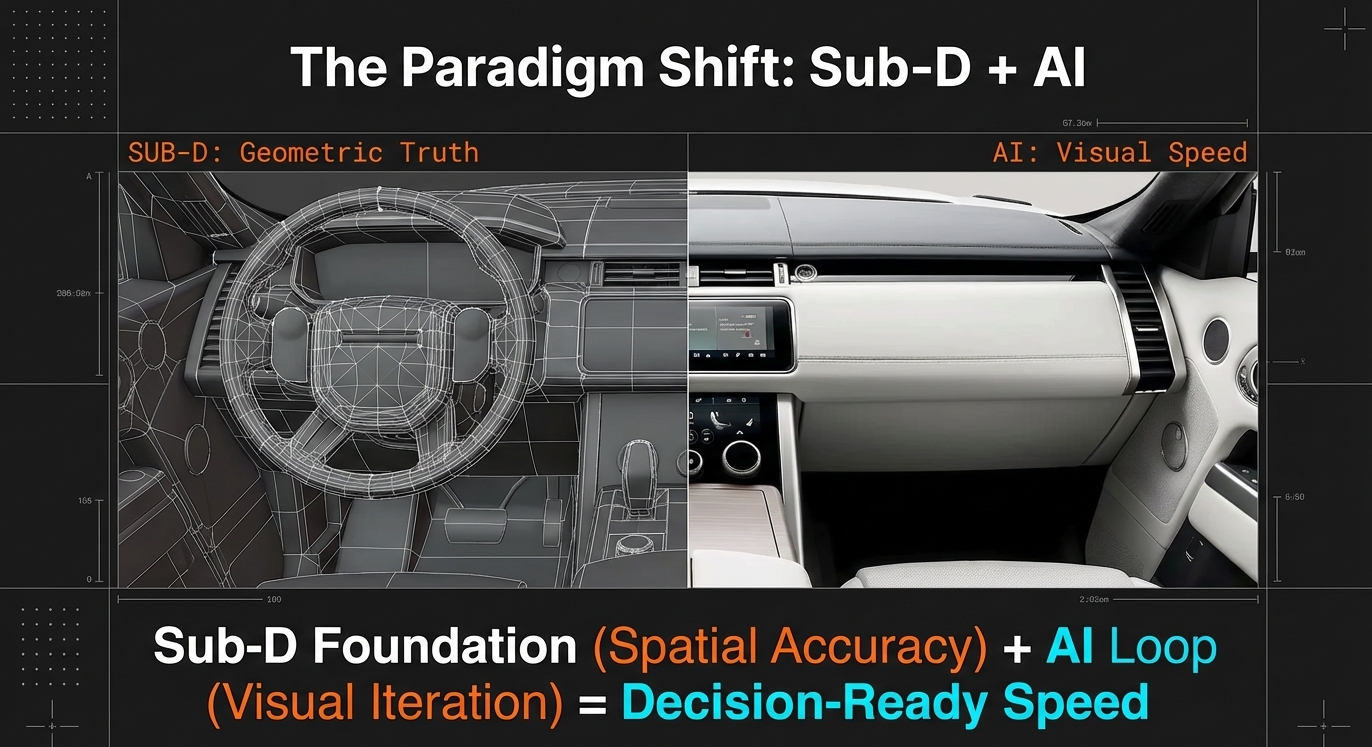 Sub‑D Modeling + AI: The Emerging Workflow Reshaping Automotive Interior Concept DesignRead the article →
 Elegant Simplicity: The Class A Surfacing Precision Behind Modernist Design LanguageRead the article →
 3D Reverse Engineering & AI Design: The Future Foundation of Medical Device...Read the article →
 Navigating CAD Design Challenges in UK Automotive – Advanced Engineering 2025Read the article →
 CAS Design and Class A Modeling: The Complete Guide from Concept to...Read the article →
 3D Printed Medical Implants & Instruments: Design to Clinical Trial Excellence in...Read the article →
 Sub-D Modeling and Concept Design in Automotive, Aerospace, and Industrial Product Design...Read the article →
Send One Sketch
The fastest way to find out whether we are any good is to give us something small and difficult. Send one sketch, one photograph or one scan — we model it and send back the surfaces, at our cost.